Categories
Digital Signages

Top Digital Signage Companies in India and Worldwide for 2026

Top Digital Signage Companies in India and Worldwide for 2026

A screen on the wall is the easy part. The platform behind it is what decides whether your message goes live in thirty seconds or three days, whether one store looks the same as five hundred, and whether your team enjoys using the system or quietly avoids it. That is why picking the right digital signage company matters far more than picking the screen.

Digital signage in India has moved well past static posters and printed flex boards. From retail and quick service restaurants to hospitals, banking, transport and corporate offices, brands now use dynamic screens to inform, sell, and guide customers in real time. With cloud-based and AI-ready platforms now standard, the real question is not whether you need digital signage, but which provider can actually deliver it reliably at your scale.

This guide compares the best digital signage companies for 2026, both the strongest providers in India and the leading global names, with honest pros and cons for each. By the end you will know which digital signage solution fits your business, your environment and your budget.

Why Choosing the Right Digital Signage Provider Matters

Your digital signage partner is not a one time vendor. They become a long term part of how your business communicates, so the decision deserves real attention. A strong digital signage company gives you more than a content management system. It gives you reliable uptime, simple day to day control, and the room to grow from one screen to a national network without switching platforms.

Here is what separates a good digital signage solution provider from an average one:

  • Higher uptime and fewer technical interruptions on live screens
  • A dashboard simple enough that your own team can run it without training
  • Content control that scales cleanly across locations and screen types
  • Integrations with analytics, social feeds, menus, POS and data sources
  • Local support that understands Indian conditions, bandwidth and languages

Top Digital Signage Companies in India

India has a fast maturing set of digital signage vendors, from cloud first software platforms to LED manufacturers. These are the names worth shortlisting if local support, Indian pricing and on ground deployment matter to you.

1

Intelisa

India and global

Intelisa is an end-to-end digital signage company that brings cloud software, displays, and content together on one platform. What makes it stand out is that it is display agnostic. Whether you run an LCD screen in an office, an LED video wall in a mall, a commercial standee at a store entrance, or a touch kiosk, Intelisa manages content on all of them from a single dashboard. It pairs cloud-based digital signage software with both cloud and on-premises deployment, which is rare in this market and important for businesses with security or data control needs.

Intelisa is built for Indian conditions, with offline playback that keeps screens running when the internet drops, multi location control, scheduling, zones, templates and social media integration. At the same time it powers deployments globally, so growing brands do not outgrow the platform. For most retail, restaurant, mall, hospital and enterprise use cases in India, it offers the strongest balance of reliability, flexibility and local support.

Best for: Multi location retail, QSR, malls, hospitality and enterprise brands that want one platform for every screen

Pros
  • Display agnostic, works on LCD, LED, OLED, standees and video walls
  • Cloud and on premise options for full data control
  • Offline playback so screens never go blank
  • One dashboard for unlimited screens and locations
  • In house hardware plus strong India support and a free trial
Cons
  • Single screen hobby users may not need every advanced feature

One Platform, Every Screen

Intelisa connects to any display through an Android media player, Fire Stick, Windows PC or built in Samsung Smart Signage player, then lets you control everything from one login.

  • Cloud based and on premise CMS
  • Digital standees, video walls and fabricated displays
  • Schedule, zone and update content in real time
  • Works offline with locally cached content
  • Trusted by businesses across India and beyond
Explore Intelisa Solutions
Intelisa digital standee for commercial digital signage in India
2

Pickcel

India

Pickcel is an India based digital signage software provider with a cloud CMS used across several countries. It is known for a large template and widget library, real time content scheduling and video wall support, which makes it a fit for mid and large enterprises running more complex display networks.

Best for: Enterprises with template heavy, multi widget display needs

Pros
  • Wide template and widget library
  • Cloud CMS with video wall support
  • Free trial available
Cons
  • Feature depth can take time for first time users
  • Advanced setups may need onboarding help
3

Xtreme Media

India

Xtreme Media brings years of experience in LED display manufacturing and large format installations. With its own CMS and strong hardware capability, it suits government bodies, banks and large institutions that need video walls and outdoor signage delivered at scale.

Best for: Government and enterprise grade LED and video wall projects

Pros
  • Strong LED and video wall expertise
  • In house CMS and integration support
  • Trusted on large institutional projects
Cons
  • More hardware led than software first
  • Premium pricing can be high for small businesses
4

Scala India

Global with India presence

Scala is a long established global signage platform with an India presence, focused on advanced visual content, advertising applications and deep customisation. Its API ready platform and third party integrations make it popular with agencies and marketing led teams that want creative control.

Best for: Advertising agencies and marketing driven display networks

Pros
  • Highly customisable and API ready
  • Strong visual content and integrations
  • Enterprise grade capability
Cons
  • Steeper learning curve
  • Better suited to medium and large setups
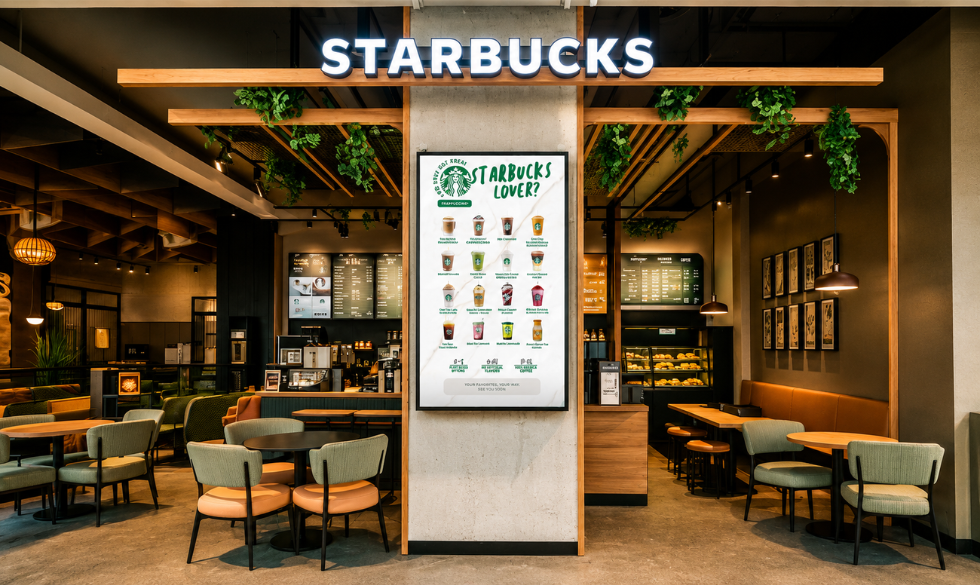
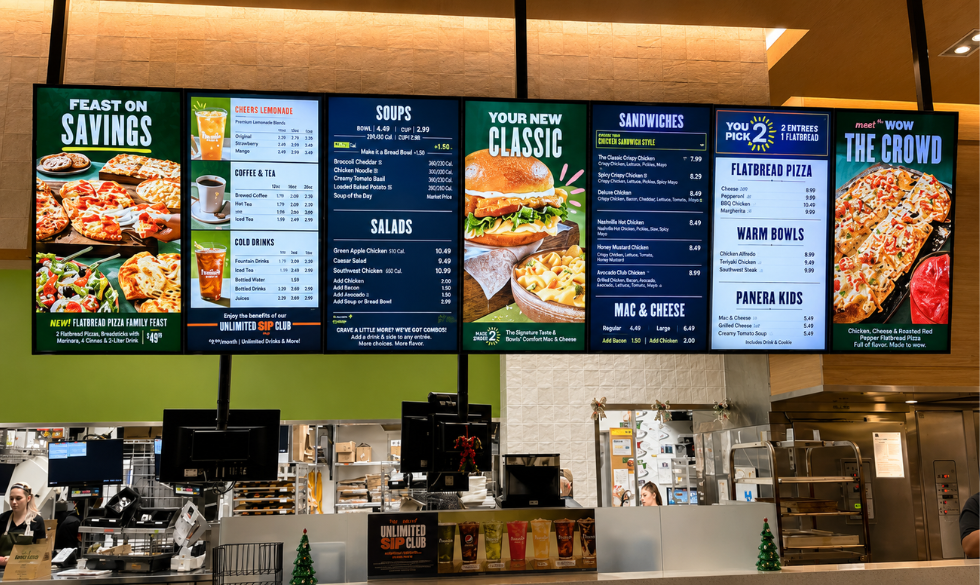
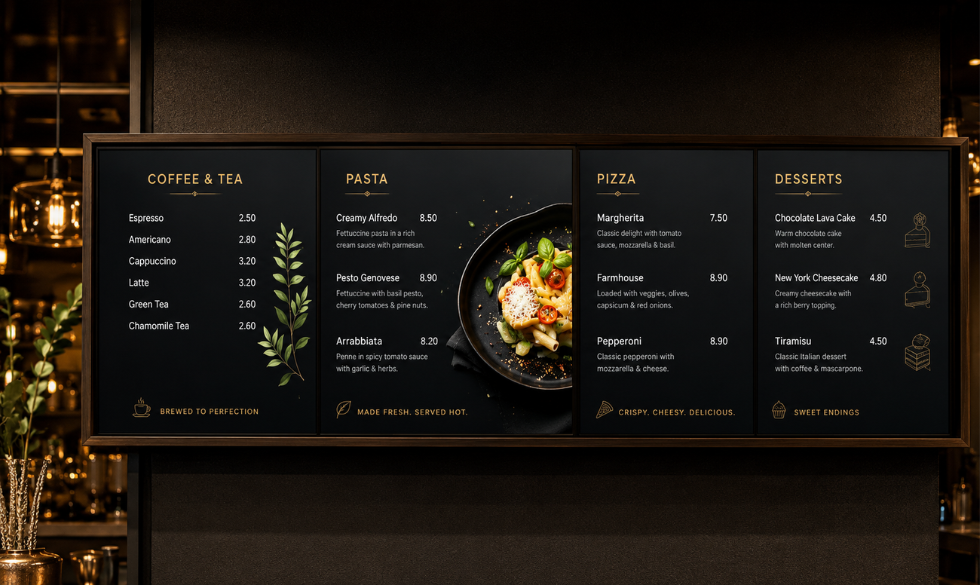
Digital signage menu screen in a cafe managed by a cloud based digital signage company

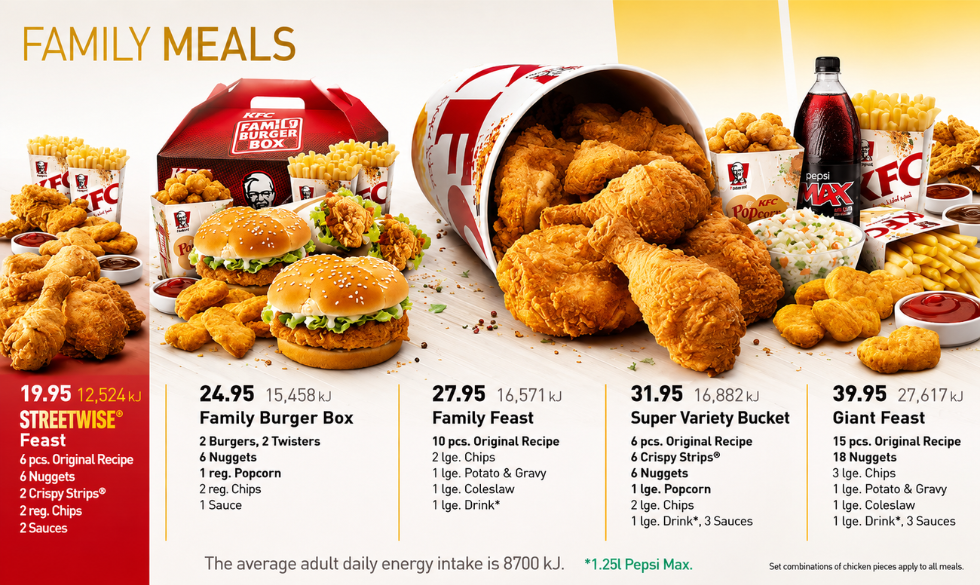
Cloud based digital signage lets a cafe or retail chain update menus and offers across every screen in seconds

Leading Global Digital Signage Companies

If you operate internationally, or simply want to compare Indian providers against the biggest global names, these platforms shape the worldwide digital signage market. Many of them work in India too, though local support and pricing can vary.

5

ScreenCloud

Global

ScreenCloud is a widely used digital signage platform built for ease of use, security and scale. It connects with everyday tools like Google Slides, Canva, Microsoft Teams and Power BI, and offers a large app store, which makes it a strong pick for corporate and enterprise internal communication.

Best for: Corporate and enterprise communication screens

Pros
  • Very easy to use with many ready apps
  • Strong integrations and enterprise security
  • Hardware agnostic
Cons
  • Subscription cost adds up at large scale
  • Hardware is usually separate
6

Yodeck

Global

Yodeck is an affordable, plug and play digital signage solution popular with small and medium businesses worldwide. It ships pre configured media players, hundreds of free templates and a simple drag and drop editor, so screens can go live almost out of the box.

Best for: Budget conscious small and medium businesses

Pros
  • Affordable and quick to set up
  • Plug and play players and many templates
  • Strong support resources
Cons
  • Deep enterprise features are more limited
  • Best for simpler networks
7

NoviSign

Global

NoviSign is an award winning digital signage software platform powering tens of thousands of screens worldwide. Its drag and drop studio, large template set and support for interactive touchscreens and wayfinding make it a good choice for businesses that want engaging, interactive content.

Best for: Interactive, touchscreen and wayfinding content

Pros
  • Easy studio with hundreds of templates
  • Strong interactive and touchscreen support
  • Hardware agnostic with offline playback
Cons
  • Power users may want deeper data integrations
  • Local India support depends on partners
8

BrightSign

Global

BrightSign is the global leader in digital signage media players. Rather than a pure software story, its strength is rock solid solid state players running a purpose built operating system, trusted for high uptime in retail, transport, museums and public spaces.

Best for: High reliability player driven deployments

Pros
  • Industry leading, reliable media players
  • Secure, purpose built operating system
  • Excellent longevity and uptime
Cons
  • Primarily a hardware and player ecosystem
  • Pairs best with its own devices
9

Samsung VXT

Global

Samsung VXT is the cloud signage platform that runs natively on Samsung Smart Signage displays through their built in player. For businesses that already buy Samsung commercial screens, it removes the need for an external media player and keeps everything in one ecosystem.

Best for: Businesses standardising on Samsung Smart Signage

Pros
  • Runs on the screen with no extra player
  • Tight integration with Samsung displays
  • Clean, modern interface
Cons
  • Best value only with Samsung hardware
  • Less flexible across mixed screen brands
10

Xibo

Global

Xibo is a leading open source digital signage platform that can be self hosted or run on Xibo cloud hosting. With a flexible CMS and a very large global install base, it appeals to technical teams that want full control and the option to host their own system.

Best for: Technical teams wanting open source control

Pros
  • Flexible open source CMS
  • Self hosted or cloud hosted options
  • Huge worldwide install base
Cons
  • Self hosting needs technical resources
  • Setup is less plug and play

The Digital Signage Market in 2026

Adoption is accelerating across India and the world. Screens are now a core marketing and communication channel, not a nice to have, and the numbers behind that shift explain why so many businesses are evaluating digital signage companies this year.

20%+ Annual growth of digital out of home advertising in India
$30B+ Projected global digital signage market size by 2030
3x More attention earned by motion and video over static boards

Key Features to Look for in a Digital Signage Company

Company names only get you so far. Before you commit, check that the platform delivers on the functionality that actually keeps screens useful over the long run.

Essential

Content Management System

The CMS is the foundation. It should let you upload and schedule content easily, manage playlists and templates, and track how each screen is performing without technical headaches.

Essential

Cloud Based Access

A cloud based digital signage software platform lets you control content from anywhere, which is non negotiable the moment you run more than one location.

Important

Real Time Updates

Promotions, events and urgent notices should go live instantly or on a schedule, not after a manual visit to each screen.

Important

Multi Screen Control

If you plan to scale, insist on managing many screens and locations from one dashboard, with grouping and permissions.

Technical

Integrations

Look for connections to social feeds, weather, POS, menus, dashboards and tools like Google Drive, so content stays dynamic and automated.

Technical

Offline Reliability

Screens should keep playing cached content if the internet drops. Offline playback is essential for Indian retail and transport conditions.

How to Choose the Right Digital Signage Provider

The best digital signage company for someone else may be wrong for you. Work through these four steps to match a provider to your real needs.

1

Define your signage goal

Decide what the screens must do. A retail store may want promotional displays, a hospital may prioritise queue and information screens, and an office may need internal dashboards.

2

Evaluate the CMS and hardware fit

Check that the CMS is easy to use, handles multiple screens across locations, and works with the displays and players you already own or plan to buy.

3

Compare pricing and support clarity

Make sure pricing covers setup, updates and support. Ask about response times, onboarding and whether support hours match your business hours.

4

Test before you commit

Request a free trial or demo. Judge ease of use, loading speed and how well it runs on your existing screens before signing anything.

Benefits of Digital Signage for Business

Whichever provider you choose, moving from static signage to digital screens delivers real, measurable gains for an Indian business.

  • More engagement: moving visuals and video attract far more attention than printed posters
  • Dynamic content: change menus, offers and messages anytime, with no reprinting cost
  • Affordable advertising: after the hardware is in place, updates cost almost nothing
  • Real time messaging: push a flash sale, alert or update across every screen instantly
  • Central control: manage one screen or hundreds from a single login

One Platform for Every Screen You Run

From a single display to a network across India and beyond, Intelisa manages LCD, LED, standees and video walls from one dashboard. Try it free and see the difference.

Start Your Free Trial

Frequently Asked Questions

What is the difference between a digital signage company and digital signage software?

Digital signage software is the content management system used to schedule and display content. A full digital signage company also provides the displays, media players, installation and support around that software. Intelisa is an end to end provider, offering both the cloud CMS and the hardware, so businesses can deploy from one partner.

How much does digital signage software cost in India?

Pricing depends on the number of screens, the software plan, and whether you need hardware like standees or video walls. Many cloud based digital signage providers, including Intelisa, offer affordable monthly plans and free trials, so small businesses can start without a large upfront cost and scale as they grow.

Can one digital signage platform manage screens across multiple locations?

Yes. A good cloud based platform lets you control screens in different cities from a single dashboard. With Intelisa you can group screens by location, schedule content, push updates in real time and monitor every display remotely, which is ideal for retail chains, franchises and enterprises.

Do digital signage screens keep working without internet?

With offline playback, yes. Content is cached locally on the media player, so if the connection drops the screen keeps playing its scheduled content without interruption. Intelisa supports offline playback across display types, which is important for Indian retail and transport environments where connectivity can be unstable.

Which industries use digital signage the most?

Retail stores, restaurants and quick service chains, malls, hospitals, banks, hotels, schools, airports and corporate offices are the heaviest users of digital signage. Each uses it differently, from menu boards and promotions to wayfinding, queue management and internal communication.

How do I choose between an Indian and a global digital signage provider?

Global platforms can be strong on features, but local support, Indian pricing, language handling and on ground installation often matter more for day to day reliability. A provider like Intelisa that has deep India presence along with global deployment capability gives you the best of both, local support with the ability to scale internationally.

Find the Right Digital Signage Setup for Your Business

Tell us your use case, your environment and your budget. We will recommend the right screens and show you how Intelisa manages them all.

Visit Intelisa.in
I
Intelisa Content Team

The Intelisa team writes about digital signage, display technology and smart communication for businesses across India and beyond. Questions? Write to us at info@intelisa.in

Categories
Digital Signages

Interactive Digital Billboards: Examples and Ideas for 2026

Interactive Digital Billboards: Examples and Ideas for 2026

A regular billboard talks at you. An interactive digital billboard talks with you. That single difference is quietly changing how brands advertise on the streets of Mumbai, Delhi and Bengaluru, and on high streets around the world. Instead of a fixed message that people glance at and forget, these screens react to the person in front of them, to the weather, to a live cricket score, or to a simple scan of a phone.

This guide breaks down what interactive digital billboards actually are, the technology that powers them, the most memorable campaigns from India and across the globe, and practical ideas you can borrow whether you are a large brand or a growing business. No jargon, just a clear picture of where outdoor advertising is heading.

What Is an Interactive Digital Billboard?

An interactive digital billboard is a digital out-of-home (DOOH) screen that invites the viewer to take part, rather than just watch. The content changes in response to an action or a signal. That action might be a person scanning a QR code, waving a hand, touching the screen, looking at it, or simply walking past at a certain time of day.

Traditional outdoor advertising is one-way. A printed hoarding shows the same image to everyone for weeks. A standard digital billboard is a step up because the content can move and update, but it still plays the same loop to every passer-by. An interactive billboard closes the loop between the brand and the audience. It turns a passive onlooker into an active participant, and that participation is what makes the message stick.

"The screens that win attention in 2026 are the ones that respond. Intelisa is built to power exactly this kind of dynamic, sensor-driven, remotely managed content across any display, anywhere." Intelisa Product Team

Why Interactive Billboards Work So Well

People are surrounded by advertising and have learned to ignore most of it. Interactive content cuts through that wall because it does something the human brain cannot resist: it reacts. When a screen responds to you, it feels less like an ad and more like an experience, and experiences are remembered and shared.

The numbers back this up. Studies of outdoor media consistently show that dynamic, digital screens hold attention far longer than static print, and that interactive formats push recall and social sharing even higher. For a brand, that means more eyeballs, more time spent with the message, and a real chance of the campaign travelling online long after someone walks away from the screen.

For the Viewer

It is fun, surprising and often rewarding. A game, a discount, a selfie with a star, or a message that seems to know the weather turns a boring commute into a moment worth talking about.

For the Brand

It delivers deeper engagement, stronger recall, measurable interactions, and free amplification when people post the experience on social media. One clever screen can earn millions of online impressions.

The Technology That Makes a Billboard Interactive

Interactivity is not one single technology. It is a toolkit, and different campaigns mix and match from it depending on the goal, the location and the budget. Here are the main methods used on interactive digital billboards today.

Most Popular

QR Codes and Mobile Links

The simplest and most affordable form of interaction. A viewer scans a code on the screen and lands on a website, an offer, a game, a WhatsApp chat or a video. It needs no special hardware and works on any digital screen, which makes it ideal for Indian businesses of any size.

Best for: offers, lead capture, app installs

Immersive

Augmented Reality (AR)

The billboard blends digital objects into the real world. A viewer points a phone at the screen and sees a 3D product, a virtual try-on, or an animated character in their surroundings. AR works especially well for beauty, fashion, auto and entertainment brands.

Best for: product launches, try-before-you-buy

Hands On

Touch Screens

The viewer touches the screen to browse products, play a game, pick an option or find directions. Common on street furniture, bus shelters and mall displays where people stand close enough to reach the screen.

Best for: malls, transit hubs, discovery

Sensor Driven

Gesture and Motion Sensing

Cameras and sensors detect movement, so the content reacts as people wave, move or simply walk by. No touching required, which keeps it hygienic and works even for large high-mounted screens.

Best for: big installations, crowd moments

Smart

Face and Audience Detection

Anonymous sensors estimate age group, gender, group size or even mood, and the screen plays the most relevant of several ready videos. Used responsibly and with privacy in mind, it makes an ad feel personal.

Best for: personalized, targeted creative

Contextual

Data and Weather Triggers

The screen changes with live signals: weather, temperature, traffic, time of day, or a cricket score. Cold drinks on a hot Delhi afternoon, hot tea when it rains. Simple to run and highly relevant.

Best for: FMCG, seasonal and real-time offers

Rs 2,000cr Projected size of India's DOOH industry by 2026
25%+ Annual growth rate of DOOH in India
90,000 Estimated connected DOOH screens across India
Large interactive digital billboards lighting up a busy city street at night

Large digital billboards in high-traffic city centres are the natural home for interactive campaigns

Interactive Digital Billboards: Global Examples

Some of the world's most talked-about outdoor campaigns became famous precisely because they invited people to take part. These are worth studying for the creative thinking behind them, not just the technology.

GMC Arcadia: Ads That Read the Crowd

Car brand GMC installed screens fitted with video sensors in a shopping centre. The system could sense whether the person in front was alone, in a couple or with family, an adult or a child, and even whether they were smiling. Based on that, it played one of around thirty tailored videos for the vehicle, so different shoppers saw a different, more relevant version of the same ad.

Women's Aid: Look at Me

One of the most powerful uses of interactive DOOH was a domestic-violence awareness campaign that used gaze-tracking technology. A bruised face was shown on the screen, and the more people who actually looked at it, the faster the injuries appeared to heal. It turned collective attention into the message itself, and became a landmark example of purpose-driven outdoor advertising.

Dallas Cowboys: Pose With the Pros

At a sports stadium, special kiosks let fans take augmented-reality selfies standing next to virtual star players. Fans picked their favourite players, posed, and shared the images on social media. The campaign generated tens of millions of social impressions, showing how a simple, shareable interaction can massively extend a physical activation online.

"The best interactive billboards are not the ones with the most expensive technology. They are the ones with the simplest idea that makes a stranger stop, smile and pull out their phone." On what makes DOOH campaigns work

Interactive Digital Billboards: India Examples

India has quickly become one of the most exciting markets for interactive outdoor advertising, driven by smart-city projects, metro expansion, and brands hungry to stand out. Here are campaigns that captured attention across Indian cities.

Netflix India: Motion-Sensitive Stranger Things Billboard

To promote a hit show, Netflix used a motion-sensitive billboard in Mumbai that flickered and reacted as people walked past, mimicking the eerie lights from the series. The pairing of pop-culture relevance with a screen that responded to movement made it a natural photo and video moment for passers-by.

Pepsi: Real-Time Cricket Polling

During cricket season, Pepsi ran billboards across Delhi that asked viewers to vote for their favourite players. The live results appeared on the screens themselves, tapping into India's love of the game and turning a billboard into a shared, real-time conversation with the crowd.

Coca-Cola: 3D and Experiential Moments

Coca-Cola has repeatedly used eye-catching outdoor executions in India, from a 3D bottle that appeared to pour LED bubbles at a busy Delhi intersection to interactive vending activations in Mumbai malls that rewarded people for engaging. These moments earned huge social media attention and became instant photo spots.

Absolut: Augmented Reality in Bengaluru

As part of a city campaign, Absolut set up AR installations in Bengaluru where people could scan to unlock animations that told the brand's story. It resonated strongly with a younger, tech-comfortable audience and lifted both engagement and brand awareness.

Large LED video wall used for dynamic interactive digital advertising

High-brightness LED video walls are the hardware backbone of most large interactive billboard campaigns

Creative Ideas You Can Actually Use

You do not need a Hollywood budget to make outdoor advertising interactive. The most practical ideas use low-cost triggers that any brand can run on a good digital signage platform. Here are ideas sorted by effort and budget.

Idea How It Works Effort Great For
QR code offer Scan to unlock a coupon, menu, or WhatsApp chat Low Retail, cafes, local brands
Weather-based creative Screen swaps content based on live temperature or rain Low Beverages, apparel, FMCG
Live social wall Show real customer posts using a campaign hashtag Medium Events, launches, malls
Real-time polling Viewers vote by SMS or scan, results shown live Medium Sports, entertainment, youth brands
Countdown and stock Live countdown to a sale or a shrinking stock counter Low Retail, e-commerce, offers
Touch to explore Touch screen to browse a catalogue or find a store Medium Malls, showrooms, transit
AR try-on or 3D Scan to see a 3D product or virtual try-on High Beauty, auto, fashion, premium
Gesture game Sensors let people play using body movement High Big brand activations, festivals

Where Interactive Billboards Perform Best in India

Location decides success. Interactive formats need dwell time, the few seconds or minutes when people are standing, waiting or walking slowly enough to notice and respond. These are the high-value environments across Indian cities.

1

Metro Stations and Transit Hubs

Millions of daily commuters with real waiting time. Delhi and Mumbai metro networks are ideal for QR, polling and social-wall interactions while people wait for a train.

2

Shopping Malls

A captive, buying-minded audience with time to spare. Touch screens, AR try-ons and store-finder interactions fit naturally in mall atriums and corridors.

3

Airports

Long dwell time and an affluent audience. Premium AR and immersive 3D executions land well with travellers who have time to engage.

4

High-Traffic Intersections and Highways

Best for weather-triggered and 3D anamorphic content that impresses at a glance, since drivers and pedestrians have only a few seconds.

Power Your Screens With Intelisa

Interactive campaigns need a platform that can schedule, trigger and update content across many screens in real time. Intelisa does exactly that, on any display, from one cloud dashboard.

  • Manage one screen or thousands from a single login
  • Schedule content by time, day, location or live trigger
  • Show social walls, QR campaigns and dynamic feeds
  • Works offline, content keeps playing if the internet drops
  • Display agnostic: LED walls, standees, touch screens and more
Explore Intelisa Software
Intelisa commercial digital display powered by cloud signage software

Standard Digital Billboard vs Interactive Digital Billboard

It helps to see the difference side by side. Both are far ahead of printed hoardings, but interactivity adds a layer of engagement and measurement that a standard loop cannot match.

Feature Standard Digital Billboard Interactive Digital Billboard
Audience role Passive viewer Active participant
Content Same loop for everyone Responds to person, data or action
Engagement Glance and move on Stops, plays, scans, shares
Social amplification Limited High, built for sharing
Measurement Estimated views Scans, taps, interactions counted
Cost Lower Higher, varies by method
Best use Broad awareness Engagement, launches, buzz

Things to Plan Before You Launch

Interactive billboards reward good planning. Before committing budget, think through these points so the experience is smooth and the results are measurable.

  • Start with the idea, not the tech. Decide what you want people to feel or do, then pick the simplest trigger that achieves it.
  • Match the interaction to the location. Touch works where people stand close, weather and 3D work for fast-moving traffic, QR works almost anywhere.
  • Keep it quick. Most people give a screen five to seven seconds. The reward for interacting should be obvious and fast.
  • Respect privacy. If you use cameras or audience sensing, keep it anonymous, disclose it clearly, and follow data-protection norms.
  • Check local rules. Outdoor advertising in India needs municipal permissions, and rules on lighting and placement vary by city.
  • Plan the software. You need a reliable platform to schedule content, feed live data, and keep screens running without downtime.

The Future of Interactive Billboards

Interactive DOOH is moving from rare, big-brand stunts to an everyday option for businesses of all sizes. Three forces are driving this. Falling LED and screen prices are putting quality displays within reach of smaller brands. Programmatic DOOH platforms let advertisers buy screen time by the hour or by the view instead of locking into long contracts. And smarter software makes live triggers, personalization and measurement simple to run.

Add faster connectivity, better sensors and AI-assisted content, and the direction is clear. Outdoor screens are becoming responsive, measurable media that behave more like the digital channels marketers already know. The brands that experiment now, even with something as simple as a well-placed QR code or a weather-triggered creative, will be the ones people remember.

Turn Any Screen Into an Interactive Experience

Whether you run one display or a nationwide network, Intelisa gives you the cloud software to schedule, trigger and manage dynamic content in real time. Join 1,000+ businesses across India using Intelisa.

Start Your Free 14-Day Trial

Frequently Asked Questions

What is an interactive digital billboard?

An interactive digital billboard is a digital out-of-home screen that responds to the viewer or to live data instead of showing a fixed message. People can engage by scanning a QR code, touching the screen, using augmented reality on their phone, or moving in front of motion sensors. The content changes based on that action, turning a passive viewer into an active participant.

How is an interactive billboard different from a normal digital billboard?

A normal digital billboard plays the same content loop to everyone, though it can move and be updated remotely. An interactive billboard reacts to the individual or to live signals such as weather, time or a scan. This creates two-way engagement, higher recall, social sharing, and measurable interactions like scans and taps that a standard billboard cannot provide.

What technologies make a billboard interactive?

The main methods are QR codes and mobile links, augmented reality, touch screens, gesture and motion sensing, anonymous face or audience detection, and live data triggers such as weather, traffic or sports scores. Campaigns often combine two or more of these. QR codes and data triggers are the cheapest and easiest to run, while AR and gesture-based interactions are more advanced and costly.

Are interactive billboards only for big brands?

No. While large, custom AR and sensor installations tend to be run by big brands, smaller businesses can add interactivity affordably. A QR code that opens an offer or WhatsApp chat, a weather-triggered creative, or a live countdown needs no special hardware and works on any digital screen. Programmatic DOOH platforms also let small brands buy screen time flexibly by the hour or by the view.

Where do interactive billboards work best in India?

They perform best in locations with dwell time, where people wait or move slowly. Metro stations, shopping malls and airports are ideal because commuters and shoppers have time to scan, touch or play. High-traffic intersections and highways suit weather-triggered and 3D content that makes an impact in a few seconds. Delhi, Mumbai and Bengaluru currently lead in digital screen availability.

How do you measure the success of an interactive billboard campaign?

Unlike static hoardings, interactive campaigns produce real data. You can track QR scans, touch interactions, AR activations, poll votes, and the website visits or WhatsApp chats they drive. Many screens also carry sensors that estimate how many people passed and engaged. Combined with social media impressions from shared content, this makes interactive DOOH far more measurable than traditional outdoor advertising.

What software do I need to run interactive content on screens?

You need a digital signage platform that can schedule content, pull in live data feeds, display social walls and QR campaigns, and manage many screens remotely. Intelisa is a cloud-based, display-agnostic platform that does this across LED walls, standees, touch screens and more from one dashboard, and it keeps playing content offline if the internet drops.

The Bottom Line

Interactive digital billboards are where creativity, technology and location meet. They take the reach of outdoor advertising and add the engagement and measurability of digital, giving brands a way to genuinely connect with people in busy public spaces. From a global gaze-tracking campaign to a cricket poll in Delhi or a simple QR offer outside a shop, the principle is the same: give people a reason to take part, and they will remember you.

The technology to run these experiences no longer sits out of reach. With the right idea and a reliable platform like Intelisa to power the screens, any brand in India can start turning ordinary displays into interactive moments that get noticed, and shared.

I
Intelisa Content Team

The Intelisa team writes about digital signage, DOOH, and smart display technology for businesses across India. Questions? Write to us at info@intelisa.in

Interactive Digital Billboards: Examples and Ideas for 2026