May 28, 2026
Is Digital Signage Worth It A Cost vs. Value Breakdown

Walk into any modern retail store, café, corporate office, or gym today and you’ll notice one thing instantly: screens are everywhere. 

A bright, moving display naturally grabs more attention than a faded poster taped to a wall. 

But here’s the real question businesses keep asking: Is digital signage actually worth the investment?

The short answer? Yes, if you use it strategically.

For many businesses, digital signage has become a tool for improving customer engagement, increasing sales, streamlining communication, and creating a more modern brand experience. 

Still, before investing, it’s important to understand the actual digital signage cost, the ongoing expenses, and the potential return you can expect. 

Let’s break it all down in simple terms.

Understanding the real digital signage cost

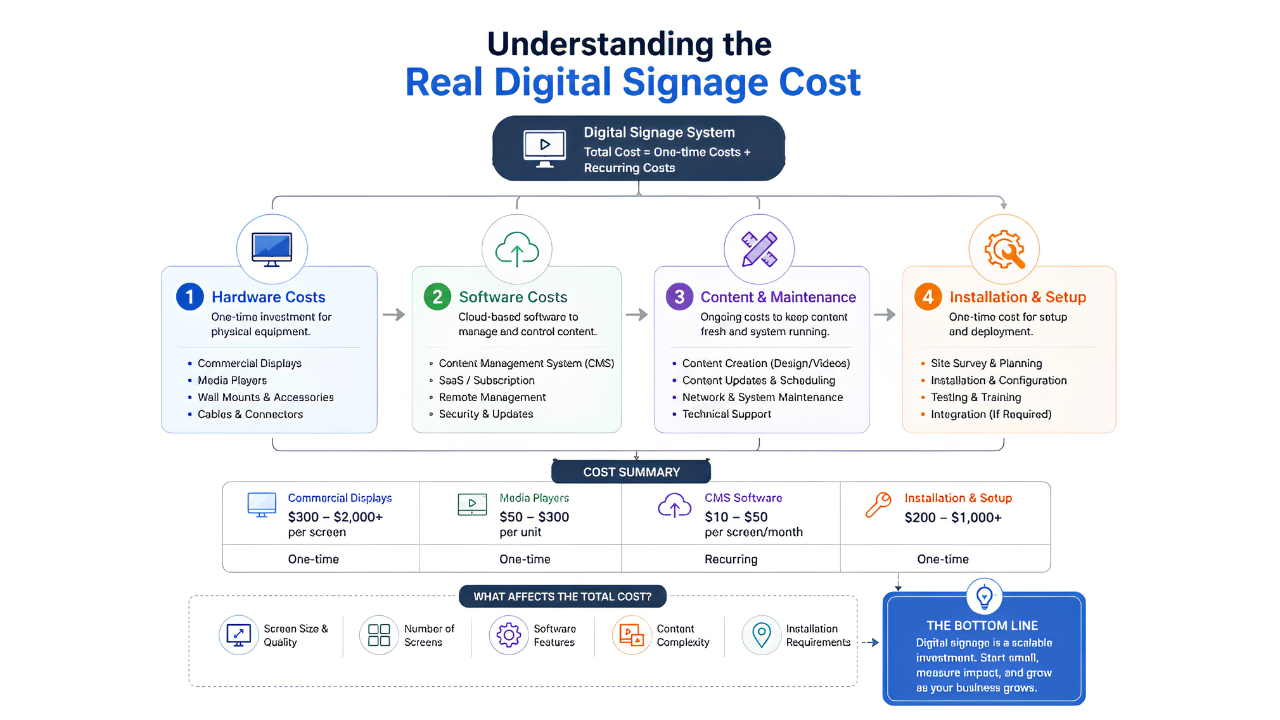
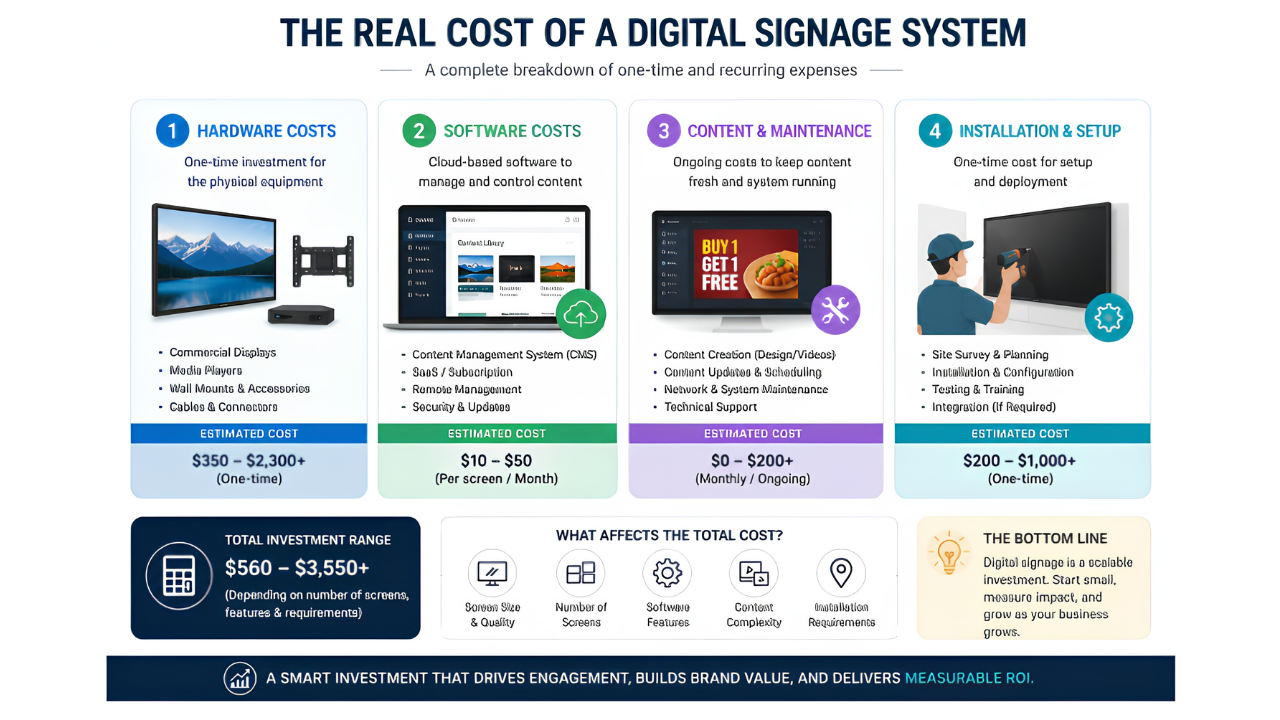
When businesses first look into digital signage, they often focus only on the screen price. But the cost of a digital signage system includes several moving parts.

The good news? You can scale it based on your budget.

1. Hardware costs

The biggest upfront expense is usually the display itself.

Most businesses use commercial-grade digital displays because they’re designed to run for long hours without overheating or losing brightness. Consumer TVs may seem cheaper initially, but they often don’t hold up well in business environments.

A basic setup may include:

  • Commercial displays
  • Media players
  • Wall mounts
  • Cabling and installation accessories

Why commercial displays matter

Commercial screens are built for:

  • 16/7 or 24/7 operation
  • Better brightness
  • Longer lifespan
  • Remote management compatibility

That’s why they’re often recommended for professional digital signage setups.

2. Software costs

The next part of digital signage pricing is the software.

Most businesses use a Content Management System (CMS) to:

  • Schedule content
  • Update screens remotely
  • Manage multiple locations
  • Run promotions in real time

Some CMS platforms charge monthly SaaS fees, while others offer one-time licenses.

Cloud-based systems are usually preferred because they’re easier to manage and scale.

This is why many businesses now prefer integrated digital signage solutions instead of sourcing hardware, software, and content tools separately. 

Digital Signage Costs
💡Platforms like Intelisa combine cloud-based content management, remote scheduling, and plug-and-play deployment into a single system, making it easier for businesses to manage screens without needing a large technical team.

3. Content creation & maintenance costs

This is the part businesses sometimes overlook.

A screen is only as effective as the content displayed on it.

You may need:

  • Promotional graphics
  • Videos
  • Menus
  • Internal announcements
  • Motion design

You’ll also need occasional maintenance for:

  • Internet connectivity
  • Software updates
  • Hardware servicing

The upside? Once your system is live, updating content becomes far cheaper than constantly printing posters or banners.
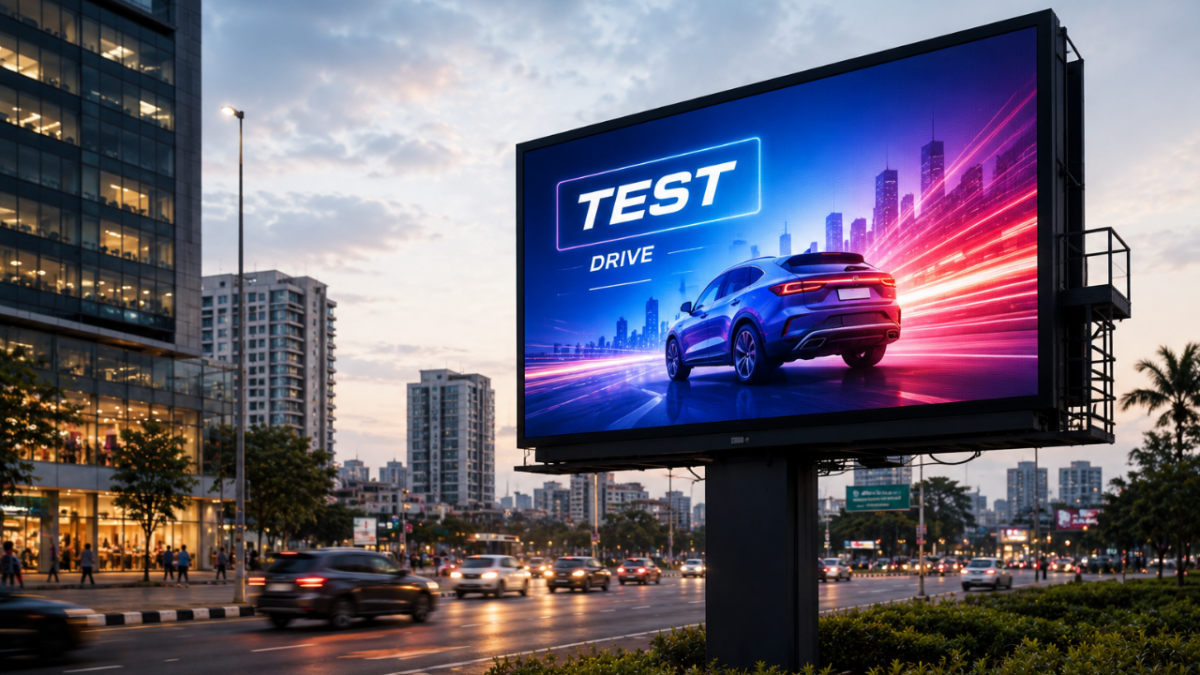
How much does digital signage cost?

Digital Signage System

Here’s a simple breakdown of typical digital signage cost ranges.

Component Estimated Cost Range Frequency
Commercial Displays $300 – $2,000+ per screen One-time
Media Players $50 – $300 per unit One-time
CMS Software $10 – $50 per screen/month Recurring
Installation & Setup $200 – $1,000+ One-time

The final cost of digital signage system depends on:

  • Screen size
  • Number of displays
  • Content complexity
  • Installation requirements
  • Software features

A small business may start with a single screen setup, while enterprises may deploy hundreds of networked displays.

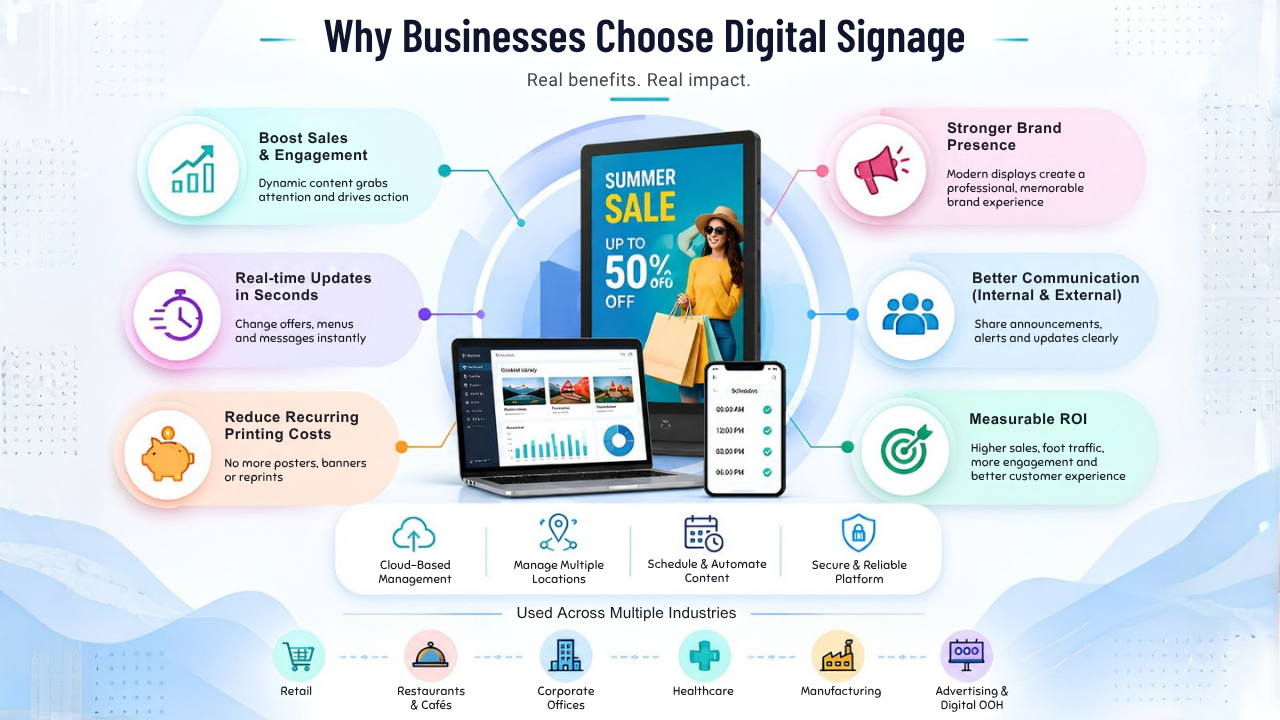
Digital signage benefits: Why businesses invest anyway

At first glance, digital signage can seem expensive.

But businesses don’t invest in it because it looks cool. They invest because it delivers measurable value.

Let’s look at the biggest digital signage benefits.

Why Businesses Choosew Digital Signage

Benefits of digital signage for retail

Retail is one of the biggest adopters of digital signage, and for good reason.

1. Increased impulse purchases

Dynamic screens naturally attract attention.

Retailers often use digital displays to:

  • Promote limited-time offers
  • Highlight high-margin products
  • Upsell add-ons near checkout

Studies have shown that digital signage can significantly increase customer engagement compared to static signage.

2. Faster Promotional Updates

Traditional print promotions take time and money.

With digital signage, you can:

  • Change offers instantly
  • Schedule promotions by time of day
  • Run seasonal campaigns without reprinting materials

This flexibility becomes especially valuable for restaurants, retail stores, and supermarkets.

Also Read: How digital signage transforms the shopping mall experience

3. Reduced perceived wait times

Customers feel less frustrated when they’re visually engaged.

That’s why many businesses place screens near:

  • Billing counters
  • Waiting areas
  • Reception desks

Even simple content like entertainment, product highlights, or social proof can improve the customer experience.

đź’ˇConfused about where to deploy digital signage? Here are some unexpected places to place digital signage and why it works.

Digital Signage Benefits for Corporate Spaces

The value isn’t limited to retail.

Corporate offices use digital signage solutions for:

  • Internal communication
  • Employee engagement
  • Meeting room scheduling
  • KPI dashboards
  • Company announcements

Instead of sending long email chains, organizations can communicate visually and instantly across offices.

Digital signage cost vs ROI: Is the return actually worth it?

This is where the conversation gets interesting.

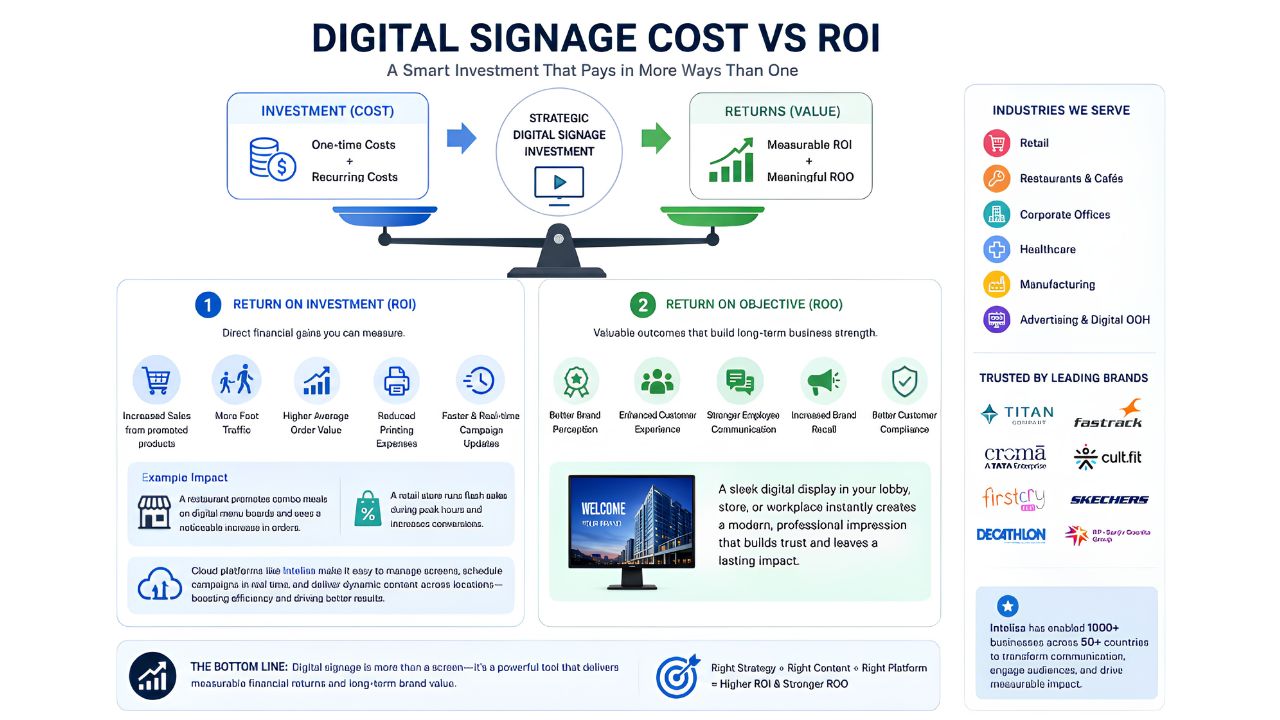
When evaluating digital signage cost vs ROI, businesses should look at two different things:

  1. Return on Investment (ROI)
  2. Return on Objective (ROO)

Both matter.

1. Return on Investment (ROI)

This refers to direct financial gains.

For example:

  • Increased sales from promoted products
  • More foot traffic
  • Higher average order values
  • Reduced printing expenses

A restaurant might promote a combo meal on a digital menu board and see a noticeable increase in orders. A retail store may push flash sales during peak hours and increase conversions.

These are measurable financial outcomes tied directly to your digital signage investment.

One major factor influencing digital signage ROI is how quickly businesses can update and personalize content across locations.

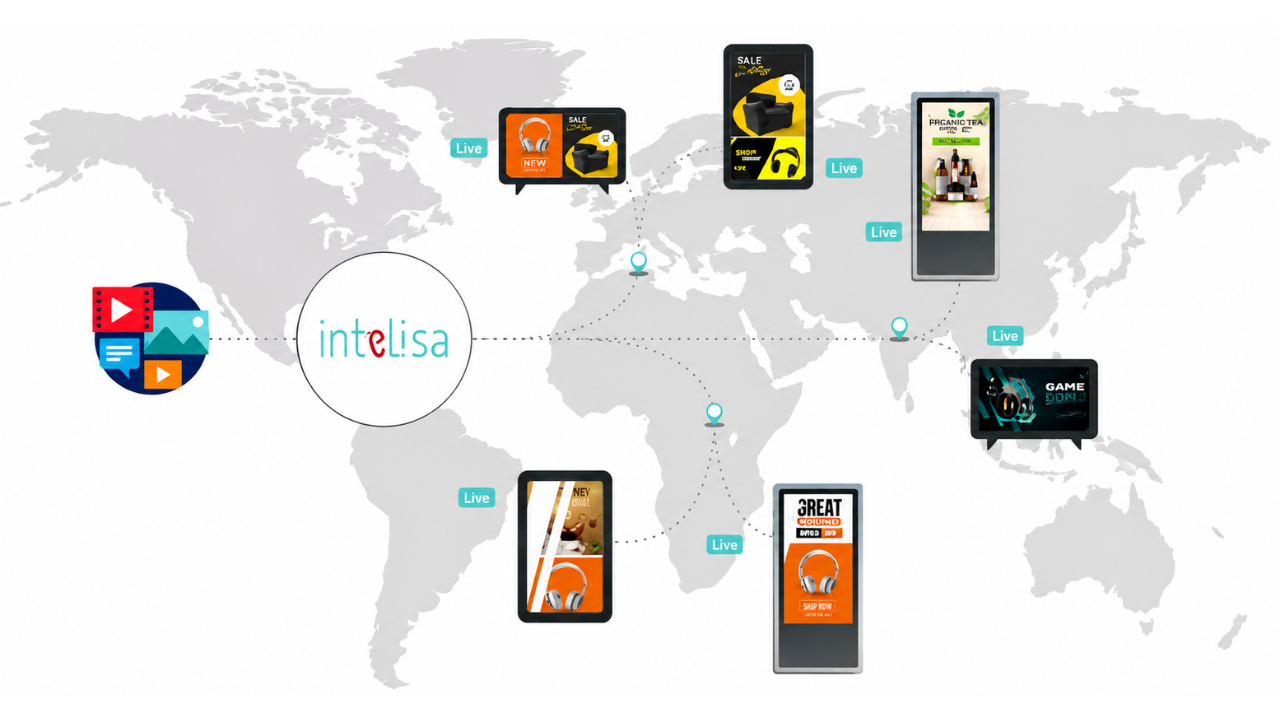
For example, Intelisa’s digital signage platform helps businesses remotely manage screens, schedule campaigns in real time, integrate social media feeds, and standardize communication across locations.

In fact, some businesses have reported engagement and sales improvements of up to 3X–5X using our dynamic digital signage displays. 

Global digital network and advertising map

What makes this interesting is the range of sectors using digital signage differently to improve ROI.

Our solutions are currently used across:

  • Retail outlets
  • Restaurants & cafĂ©s
  • Corporate offices
  • Healthcare facilities
  • Manufacturing plants
  • Advertising & Digital OOH environments

For instance:

  • Retail brands use digital displays for promotions and omnichannel experiences
  • Restaurants use them for dynamic menu boards and queue management
  • Healthcare clinics use screens for patient education and communication
  • Manufacturing facilities use them for process visibility and workforce communication

You can find the details about the various sectors we serve here!

The platform has also been deployed across large multi-location businesses.

One apparel and fashion chain in India reportedly rolled out our solution across 250 stores to support centralized content management and larger omnichannel goals.

This highlights an important point: the ROI of digital signage often increases as businesses scale because content updates, promotions, and communication become far easier to manage centrally.

2. Return on Objective (ROO)

Some benefits are harder to measure directly, but they still have a major business impact.

This includes:

  • Better brand perception
  • A more modern customer experience
  • Stronger employee communication
  • Increased brand recall
  • Better customer compliance
  • Improved visual consistency across locations

For example, a sleek digital display in a retail store, clinic, or office lobby instantly makes the business feel more modern and premium.

That perception influences customer trust.

This is one reason why sectors like retail, healthcare, hospitality, and corporate offices are rapidly adopting modern digital signage solutions. Businesses are no longer using screens just to display information, they’re using them to shape experiences.

Digital Signage Cost vs Roi

Is digital signage worth it for small businesses?

Yes, if you start small and use it strategically.

Many small businesses assume digital signage is only for giant retailers or corporations. That’s no longer true. Affordable hardware and cloud-based software have made digital signage solutions accessible even for local businesses.

Today, small businesses don’t necessarily need expensive enterprise infrastructure to get started.

Many modern platforms, including our solution, offer plug-and-play deployment, centralized scheduling, and subscription-based pricing models that make digital signage more affordable for growing brands.

Digital signage in India: Why the market is growing fast

The adoption of digital signage in India has grown rapidly over the last few years.

Retail chains, restaurants, malls, hospitals, gyms, and corporate offices are increasingly replacing traditional posters with digital displays.

Several factors are driving this growth:

  • More affordable hardware
  • Better internet connectivity
  • Competitive SaaS pricing
  • Growing demand for modern customer experiences

The rise of affordable cloud-based platforms has also accelerated the growth of digital signage in India. Even smaller brands are using digital displays to compete with larger businesses visually.

Final verdict: Is digital signage worth it?

For most businesses, yes.

The real value of digital signage goes beyond the screen itself. It’s about flexibility, visibility, engagement, and long-term efficiency.

While the upfront digital signage cost can feel significant, the long-term savings and customer engagement benefits often outweigh the initial investment.

The key is having:

  • The right hardware
  • A clear content strategy
  • Consistent updates
  • Defined business goals

When used correctly, digital signage becomes less of an expense and more of a business growth tool. Want to explore how it works? Book a free trial with us today!

FAQs About Digital Signage Cost & ROI

A basic digital signage setup can cost anywhere from a few hundred dollars to several thousand, depending on the display size, software, installation, and number of screens.

The biggest factors include:

  • Commercial display quality
  • Number of screens
  • CMS software subscriptions
  • Content creation needs
  • Installation complexity

Yes. Small businesses can start with affordable single-screen setups and still see strong engagement and branding benefits.

The biggest benefits include:

  • Better customer engagement
  • Faster promotional updates
  • Reduced printing costs
  • Improved brand perception
  • Increased sales opportunities

Businesses typically track:

  • Sales lift
  • Customer engagement
  • Foot traffic
  • Promotion performance
  • Operational savings

They also measure softer metrics like brand awareness and customer experience improvements.