Still using printed posters and static boards to communicate with your customers? In 2026, that approach is costing you attention, engagement, and revenue. Electronic signage, also known as digital signage, is transforming how businesses of all sizes communicate, promote, and connect with their audiences.
From retail stores and airports to corporate offices and smart cities, electronic display screens are reshaping how brands deliver messages. According to industry research, electronic signage can boost brand awareness by up to 47.7 percent and increase average purchase amounts by 29.5 percent.
In 2026, electronic signage is no longer just about displaying content. It is about delivering smart, real-time, and personalized experiences. With the rise of AI and cloud-based platforms like Intelisa, businesses can now turn simple screens into intelligent communication systems.
This complete guide will help you understand what electronic signage is, how it works, why it matters more than ever, and how to get started today.
In This Article
- What Is Electronic Signage?
- How Electronic Signage Works
- Why Electronic Signage Matters in 2026
- Key Features of Modern Electronic Signage
- Use Cases by Industry
- Intelisa: Making Electronic Signage Smarter
- Electronic vs Traditional Signage
- Challenges and How to Overcome Them
- The Future of Electronic Signage
- Best Practices
- Frequently Asked Questions
What Is Electronic Signage?
Electronic signage refers to the use of digital screens such as LED, LCD, or projection displays to show content such as advertisements, announcements, videos, menus, or real-time information. While the terms electronic signage and digital signage are often used interchangeably, electronic signage specifically refers to electronic display boards and screen-based communication systems used in physical environments.
Unlike traditional printed signage, an electronic signage system allows businesses to:
- Update content instantly without any physical effort
- Display dynamic and interactive visuals that capture attention
- Schedule content based on specific times, locations, or events
- Integrate real-time data for smarter, more relevant communication
- Manage hundreds of screens remotely from a single platform
In simple terms, electronic signage replaces static boards with smart, flexible, and engaging digital display screens that can be fully controlled from anywhere in the world.
How Electronic Signage Works
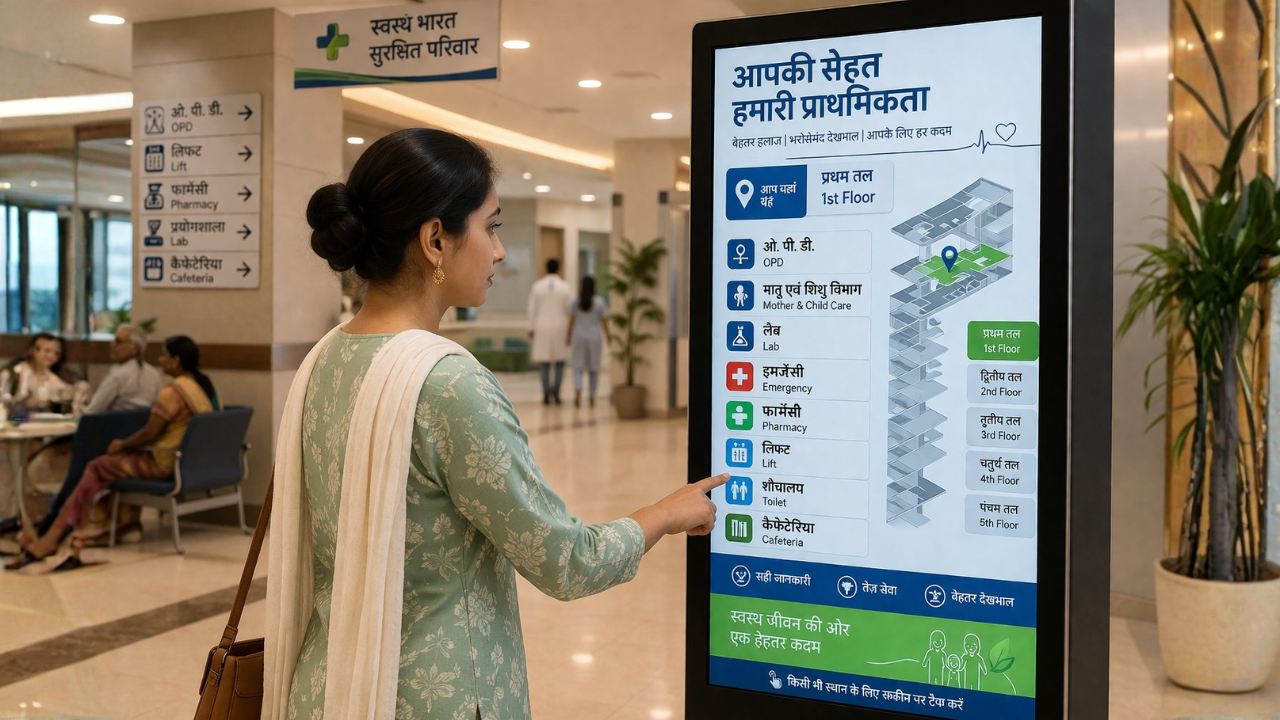
Electronic signage may look simple on the outside, but behind the scenes it relies on a combination of hardware, software, and connectivity to create a seamless communication system. Here are the four core parts of any electronic signage system.
Display Screen
The physical electronic display board (LED or LCD) on which content is shown. These screens are designed for continuous operation and high brightness, so content stays visible even outdoors or in well-lit spaces. Modern displays come in many sizes, from small indoor panels to large electronic billboards.
Media Player
A device that stores and plays content on the screen. It ensures smooth playback of videos, images, and animations while supporting multiple file formats and resolutions. Some advanced systems use cloud-based players that remove the need for local hardware.
Content Management System (CMS)
The brain of the system. A good digital signage software platform lets you upload, manage, schedule, and publish content across all your screens. It gives full control over what is displayed, when, and how, all from one dashboard with no technical knowledge required.
Internet Connectivity
Enables real-time updates and remote management. With connectivity, businesses can control screens from anywhere, push instant updates, and run automated campaigns without manual work. Wi-Fi, LAN, or 4G and 5G connections are all commonly used.
Platforms like Intelisa bring all these elements together into one unified cloud-based electronic signage system, allowing businesses to control multiple screens across different locations from a single dashboard.
Why Electronic Signage Matters in 2026
The importance of electronic signage has grown rapidly due to changes in technology, consumer expectations, and the increasing need for real-time communication across industries. Here is why it is more critical than ever in 2026.
1. Real-Time Communication
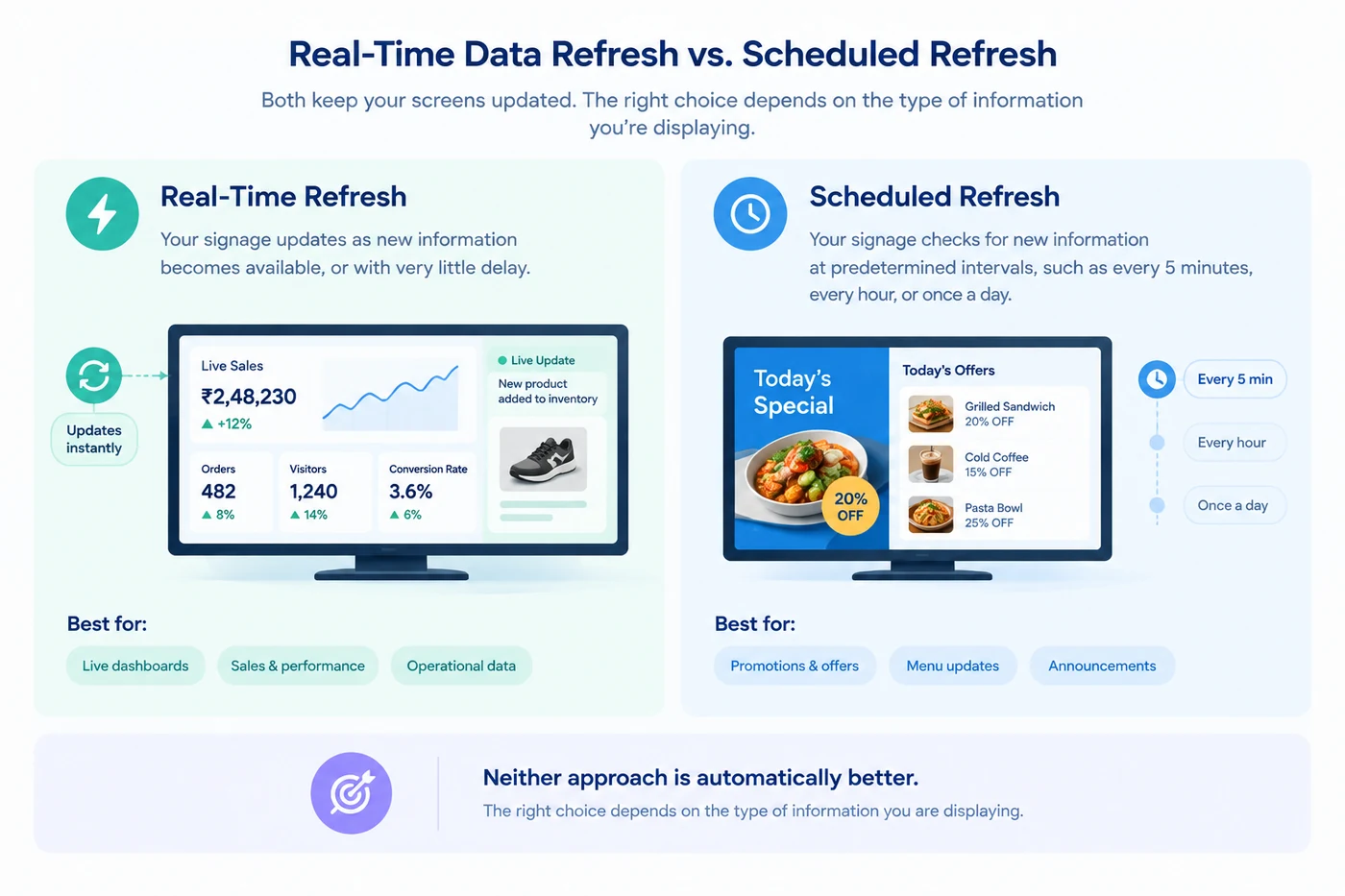
In today's fast-paced world, information changes constantly, and businesses need a way to communicate instantly. Electronic signage allows real-time updates, ensuring customers always see the most accurate and relevant information at the right moment.
- Restaurants updating menu availability and daily specials
- Airports showing live flight status and gate changes
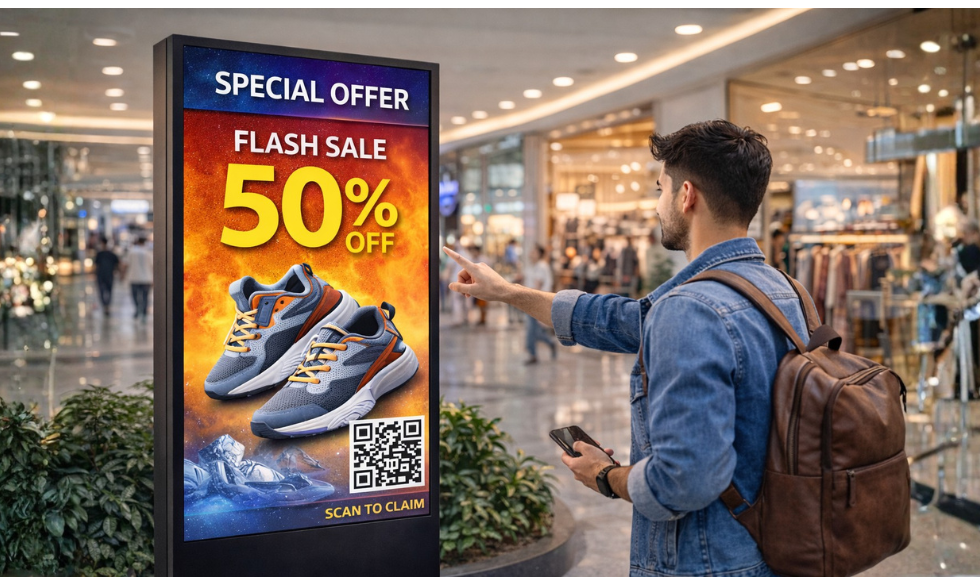
- Retail stores promoting flash sales as they happen
- Hospitals displaying real-time queue numbers and wait times
With Intelisa, these updates can happen automatically without manual intervention, saving time and eliminating errors.
2. Higher Engagement and Attention
Electronic display screens naturally attract more attention than static posters because they use motion, light, and dynamic visuals. This makes them highly effective in crowded environments where grabbing and holding attention is difficult.
- Motion graphics grab the eye instantly
- Bright displays stand out in crowded public spaces
- Videos increase brand recall and customer engagement significantly
Research shows people retain 65 percent of information delivered through visual content combined with text, compared to only 10 percent through text alone, making electronic signage a powerful communication tool.
3. Cost-Effective in the Long Run
Although the initial investment may seem high, electronic signage significantly reduces long-term costs tied to printing, installation, and manual updates. Once the system is in place:
- No printing costs for every campaign change
- No manual replacements or installation charges
- Instant content updates at zero extra cost
- Multiple campaigns on a single screen, maximizing ROI
Businesses typically recover their investment within 12 to 18 months, after which the savings on print and design costs add up significantly.
4. Personalization and Targeted Messaging
In 2026, personalization has become essential for effective marketing. Electronic signage lets businesses display different content based on time, location, and audience type, making communication far more relevant.
- Show different content at different times of the day
- Target specific audiences based on location or demographics
- Adapt messaging dynamically based on real-time data
For example, a cafe screen can promote coffee and breakfast in the morning, lunch deals in the afternoon, and dinner specials or happy hour in the evening, all automatically.
5. Integration with AI and Data
AI is turning electronic signage into an intelligent system that analyzes data and optimizes performance automatically. It helps businesses understand audience behavior and adjust content in real time without manual work.
- Analyze audience behavior and dwell time
- Optimize content performance automatically
- Respond to environmental factors like weather or time of day
- Deliver hyper-personalized messages at scale
Platforms like Intelisa let businesses use AI capabilities without needing technical expertise, making smart electronic signage accessible to everyone.
6. Sustainability and Environmental Benefits
By removing the need for printed materials, electronic signage significantly reduces paper waste and the carbon footprint of traditional print advertising. In 2026, sustainability is a growing priority, and electronic display boards offer a greener communication alternative.
Key Features of Modern Electronic Signage
Modern electronic signage systems come with advanced features that make them powerful tools for communication, marketing, and operations management.
Cloud-Based Control
Manage and update content remotely from any device, at any location, giving you quick updates and full control over multiple screens without being present.
Multi-Screen Management
Control hundreds of display boards across locations from one dashboard. Whether you have 5 screens or 500, management is equally simple.
Content Scheduling
Schedule content in advance by time, day, or event, so the right message reaches the right audience automatically.
Real-Time Updates
Update any screen instantly with no delay, letting you respond fast to price changes, promotions, emergencies, or breaking news.
Analytics and Insights
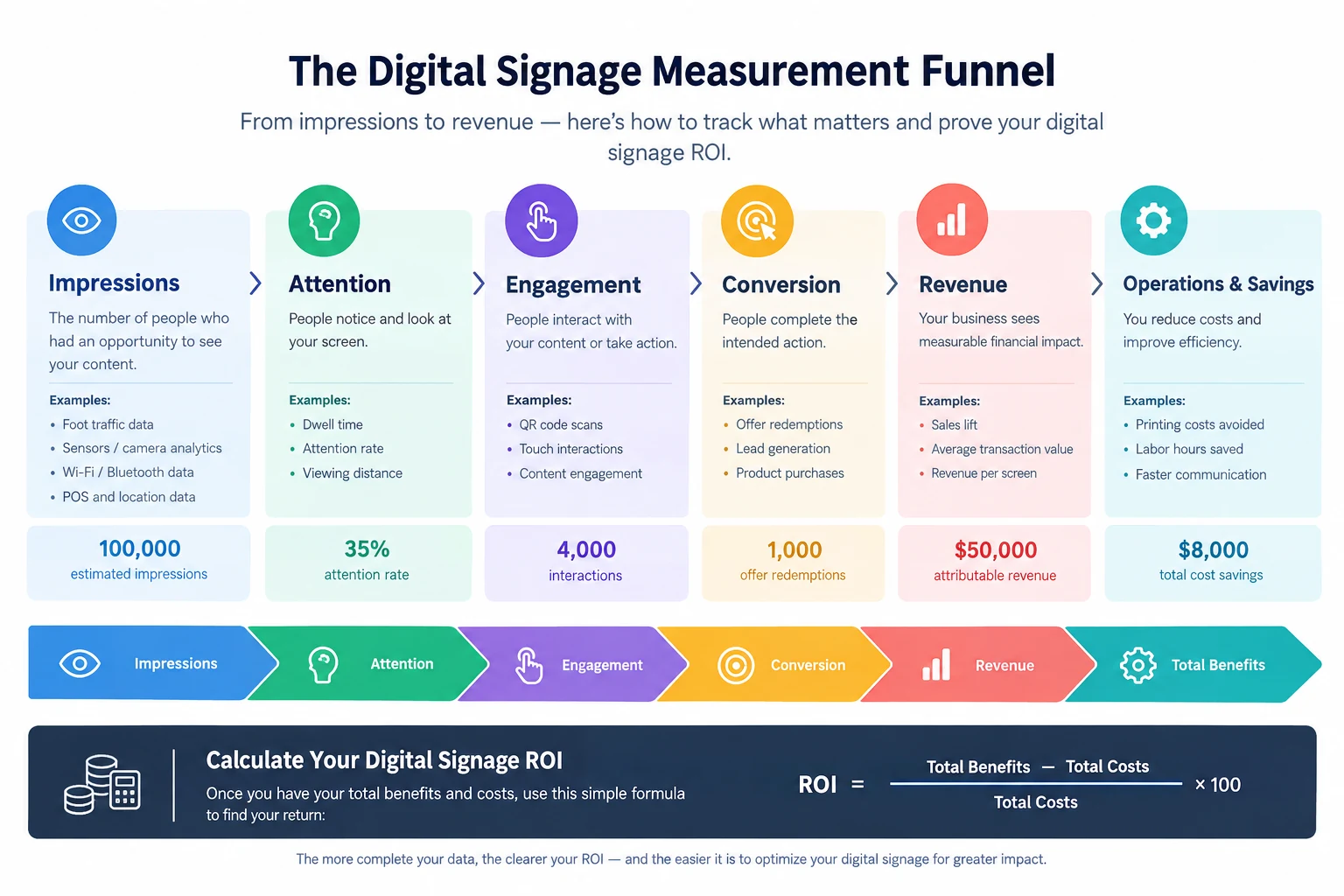
Track content performance, viewer engagement, and campaign effectiveness for data-driven decisions and continuous improvement.
QR Code Integration
Connect offline viewers to online platforms for instant purchases, form fills, social follows, or information access.
Social Media Integration
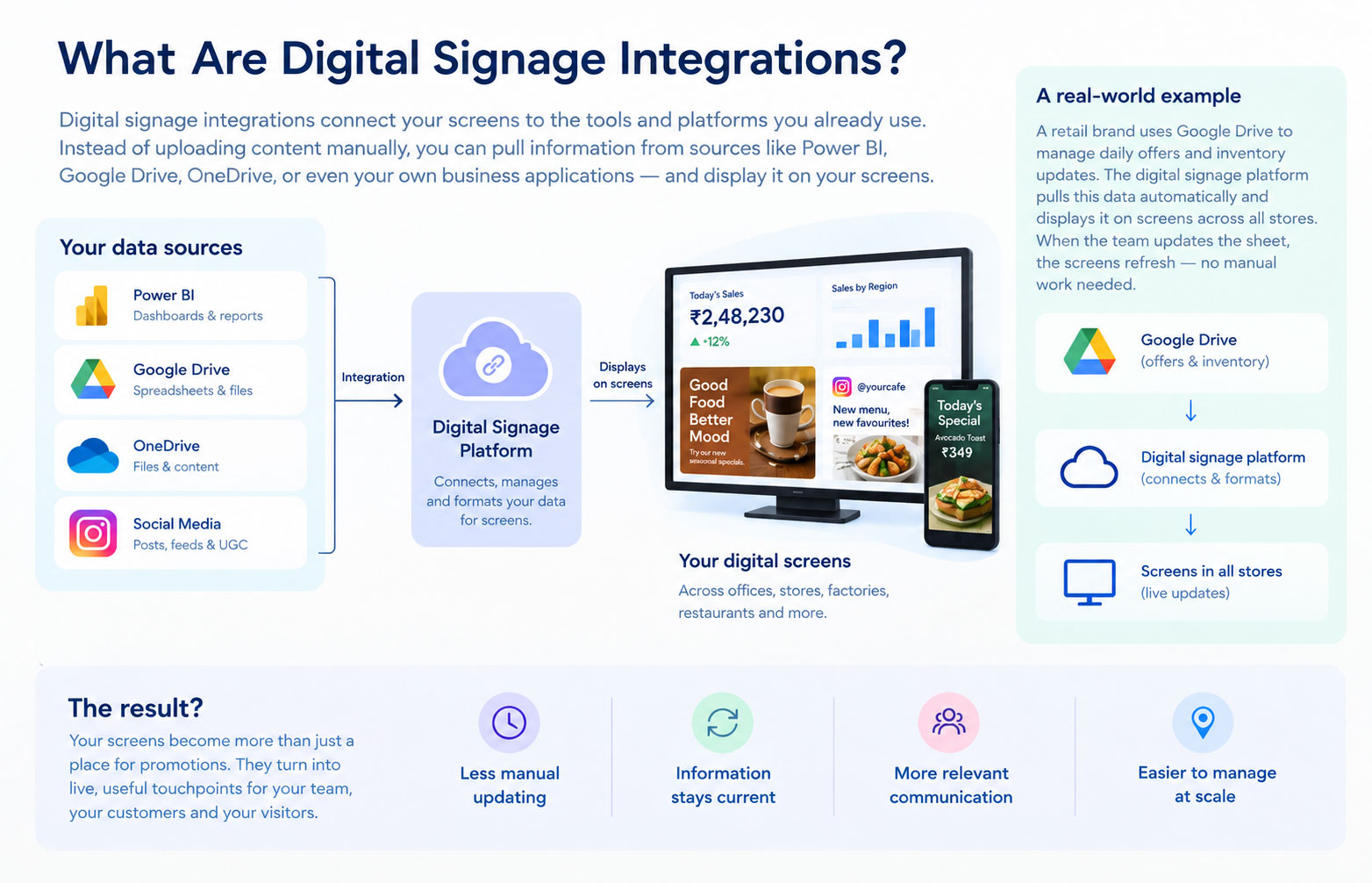
Automatically pull and display social feeds, user-generated content, and live hashtag walls, keeping content fresh and community-driven.
Zone-Based Display
Split screens into zones showing different content at once: a news ticker, a promo video, and live weather, all together.
Intelisa combines all these features into one easy-to-use cloud-based digital signage software platform, simplifying electronic signage management for businesses of all sizes.
Common Use Cases of Electronic Signage by Industry
Electronic signage is widely used across industries to improve communication, engagement, and customer experience. Here is how different sectors are leveraging electronic display systems in 2026.
Retail
Retail stores use electronic signage for retail to display promotions, highlight new products, show real-time pricing, and create an immersive shopping experience. Display boards at entry points and checkout counters significantly increase impulse purchases and average basket size.
Restaurants and Cafes
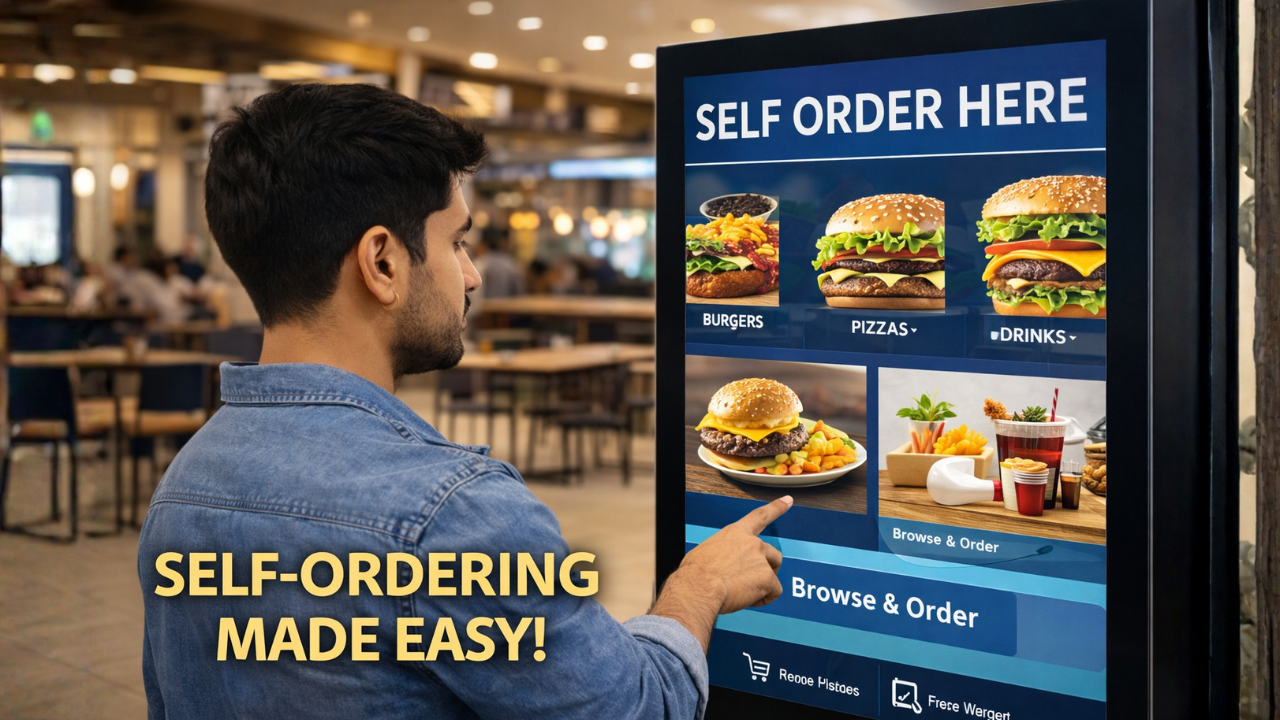
Restaurants use digital menu boards and electronic signage to display items, prices, combo deals, and limited-time offers. Menu updates that once took days now take seconds, improving customer experience and reducing staff workload.
Corporate Offices
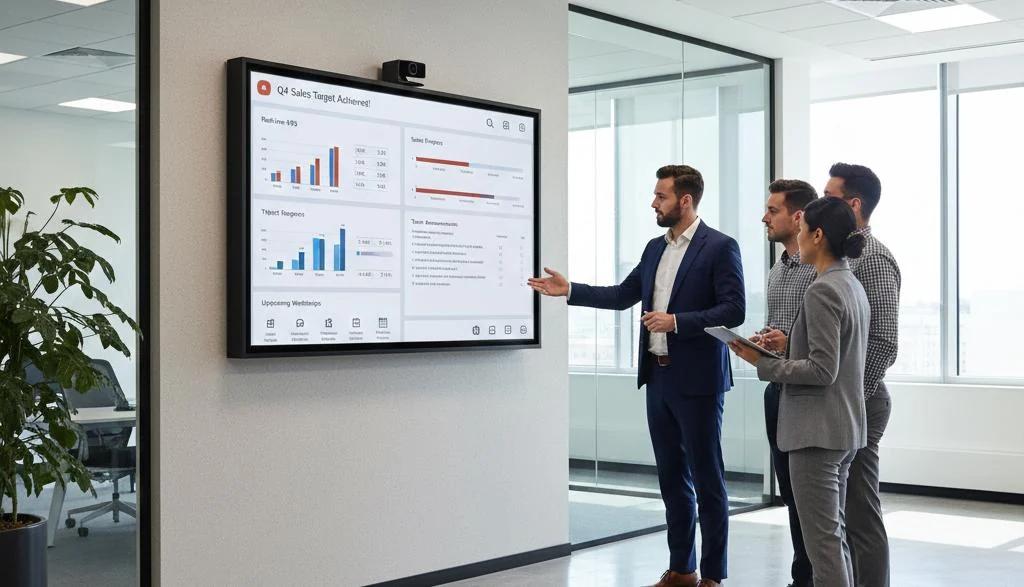
Companies use corporate electronic signage for internal communications, KPI dashboards, meeting room displays, visitor welcome screens, and employee recognition boards, keeping communication smooth and engaging.
Healthcare
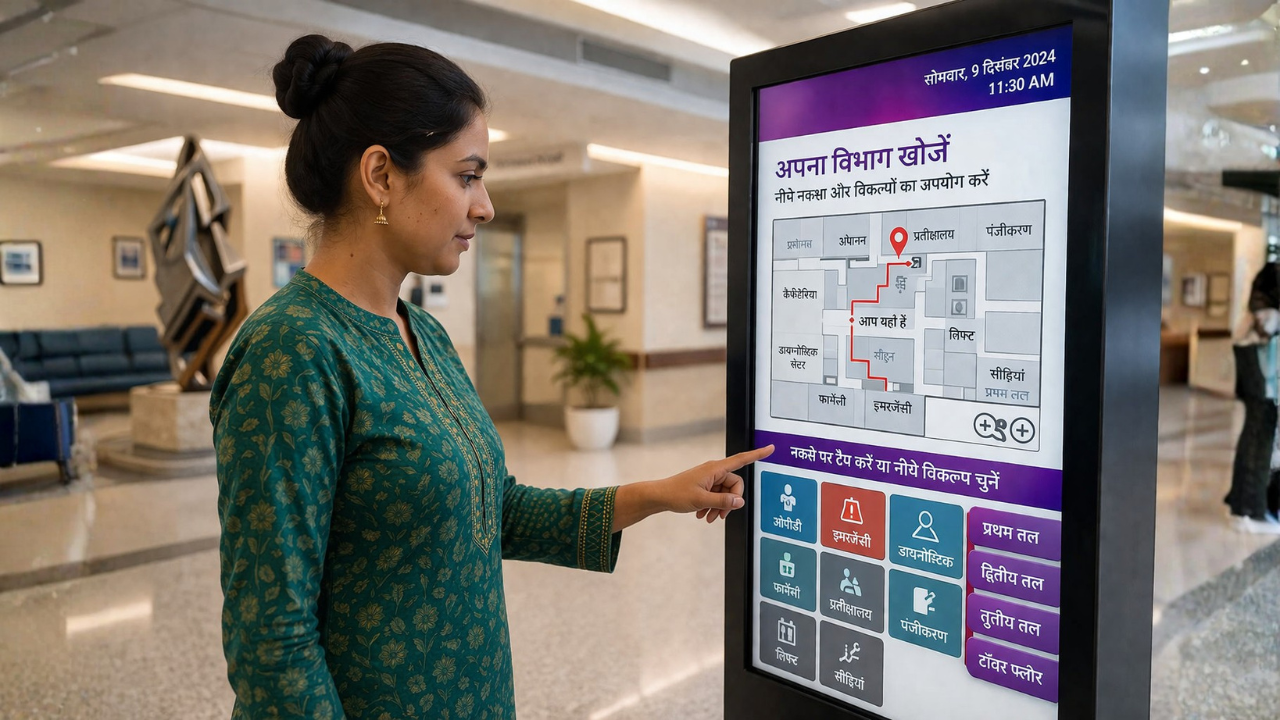
Electronic signage in healthcare is used for patient queue management, wayfinding, health awareness campaigns, appointment reminders, and staff communications, improving efficiency and reducing patient anxiety in waiting areas.
Education
Schools, colleges, and universities use electronic information displays for campus announcements, event updates, timetable changes, emergency alerts, and navigation, improving communication across large campuses.
Transportation
Airports, railway stations, and bus terminals use electronic signage for real-time schedule updates, gate information, navigation maps, and emergency communications, ensuring smooth passenger flow in high-traffic environments.
Manufacturing
Factories and warehouses use electronic display boards for production dashboards, safety alerts, shift updates, and performance metrics, keeping floor workers informed and operations running without paper-based communication.
Intelisa: Making Electronic Signage Smarter
Intelisa is redefining how businesses use electronic signage by making it smarter, simpler, and more effective. As a leading digital signage solutions provider, Intelisa serves businesses across India, the USA, Canada, the UAE, Qatar, and Australia.
- Centralized Dashboard: manage all your screens from one place with ease
- Real-Time Updates: update content across all locations instantly
- Inventory Sync: auto-update product availability and pricing
- QR Code Integration: connect offline signage with online conversions
- AI Capabilities: smart automation, audience analytics, content optimization
- Social Media Integration: display your latest social content on any screen
- Zone-Based Display: show multiple content types on one screen at once
- No Technical Expertise Needed: anyone can manage signage with the intuitive interface
Electronic Signage vs Traditional Signage
Here is a clear comparison of electronic signage and traditional signage to understand why businesses are rapidly making the switch.
| Feature | Traditional Signage | Electronic Signage |
|---|---|---|
| Content Update | Manual, requires reprinting | Instant update from anywhere |
| Flexibility | Low, fixed once printed | High, change anytime |
| Engagement | Low, static visuals | High, motion and dynamic content |
| Cost Over Time | High, repeat printing costs | Cost-efficient, one-time hardware |
| Personalization | None | Time, location, and audience-based |
| Environmental Impact | High, paper and ink waste | Low, no print materials needed |
| Analytics | None | Full performance tracking |
| Remote Management | Not possible | Fully remote via cloud |
Electronic signage clearly provides a more modern, flexible, and effective communication solution than traditional signage, and the gap will only grow wider as technology advances.
Challenges of Electronic Signage and How to Overcome Them
Initial Investment
The upfront cost of hardware can be high for some businesses. The key is to start small, even one or two screens in high-traffic areas, and deliver measurable results quickly. As ROI becomes visible, you can scale up gradually without a large upfront commitment.
Content Creation
Creating engaging content consistently can seem challenging for small teams. Pre-built templates, AI-generated content tools, and social media auto-integration, as offered by Intelisa, make the process fast, easy, and cost-effective.
Technical Setup
Setup and configuration can feel overwhelming for non-technical users. Choosing a user-friendly platform like Intelisa, with guided onboarding, support, and an intuitive interface, removes the need for any coding or IT knowledge.
Ongoing Maintenance
Like any technology, electronic display boards need periodic maintenance for optimal performance. Investing in high-quality commercial-grade hardware from the start significantly reduces maintenance issues and ensures long-term reliability.
The Future of Electronic Signage
The future of electronic signage is exciting and innovation-driven. As technology evolves, these systems will become even more intelligent, immersive, and deeply integrated into everyday environments. Key trends shaping 2026 and beyond:
- AI-generated content that adapts automatically based on audience, time, and context
- Interactive touch and gesture-controlled screens for hands-on customer engagement
- Voice-enabled electronic kiosks for completely hands-free interaction
- 3D and immersive holographic visuals that capture attention in a crowded world
- IoT-connected electronic displays that respond automatically to real-time sensor data
- Programmatic signage advertising for automated, data-driven ad buying on out-of-home screens
- Facial recognition and audience analytics to understand viewers and optimize messaging
- 5G-powered electronic billboards offering faster connectivity and richer content experiences
These advancements will make electronic signage more powerful, personalized, and deeply integrated into both physical and digital customer experiences, making it an indispensable business tool for the decade ahead.
Best Practices for Using Electronic Signage Effectively
To get the best results from your electronic signage system, follow these proven best practices.
- Keep content short and clear: viewers typically have 3 to 5 seconds of attention, so make your message instantly understood
- Use high-quality visuals: blurry or low-resolution images damage credibility, so always use sharp graphics
- Update content regularly: stale content loses effect, so keep screens fresh with new offers, news, and promotions
- Include a clear call-to-action: every piece of content should tell the viewer what to do next, such as scan a QR, visit a website, or call now
- Use data to optimize: review analytics regularly and adjust content based on what performs best
- Match content to location and audience: tailor your message to the specific context of each screen
- Test before going live: always preview content on the actual screen before publishing to catch display issues
Ready to Transform Your Business Communication?
See the difference smart electronic signage can make. Start your free trial with Intelisa today, no credit card required.
Try Intelisa for FreeFinal Thoughts
Electronic signage in 2026 is not just a display tool, it is a smart communication platform that combines technology, data, and creativity to deliver real business results. With real-time updates, AI integration, cloud-based control, and advanced analytics, businesses can deliver personalized and impactful messages that truly connect with their audience at the right time and place.
Whether you run a single retail store or manage hundreds of locations globally, electronic signage offers a scalable, cost-effective, and powerful way to communicate, engage, and convert. Platforms like Intelisa make this technology accessible, scalable, and easy to use for businesses of all sizes without requiring any technical expertise.
In a world full of distractions, electronic signage helps brands stand out, not just by being visible, but by being relevant, engaging, and timely. The businesses that invest in smart electronic signage today will have a clear competitive advantage tomorrow.
Frequently Asked Questions
What is electronic signage?
Electronic signage refers to digital display systems such as LED or LCD screens used to show advertisements, announcements, menus, or real-time information. Unlike traditional printed signage, electronic signage enables instant content updates, dynamic visuals, and improved audience engagement in any environment.
How does electronic signage work?
Electronic signage works through a combination of display screens, media players, and a content management system (CMS). The CMS lets users upload, schedule, and manage content remotely, while internet connectivity enables real-time updates across all screens simultaneously from a single dashboard.
What are the benefits of electronic signage for businesses?
Electronic signage helps businesses improve visibility, engagement, and communication. It allows real-time content updates, reduces printing costs, supports targeted and personalized messaging, and provides performance analytics, making it a cost-effective and scalable communication solution for businesses of all sizes.
What is the difference between electronic signage and digital signage?
Electronic signage and digital signage refer to the same concept: the use of screen-based display systems to show dynamic content. Electronic signage emphasizes the electronic display boards and hardware, while digital signage is the broader industry term. Both describe the same technology used to communicate, advertise, and inform through screens.
What is the future of electronic signage?
The future of electronic signage includes AI-driven content automation, interactive and touch-enabled screens, voice-controlled kiosks, 3D and holographic displays, IoT integration, and 5G-powered electronic billboards. These advancements will make electronic signage smarter, more personalized, and more deeply integrated into everyday business and customer experiences.
How does AI improve electronic signage?
AI enhances electronic signage by analyzing audience behavior, automatically optimizing content performance, and enabling real-time personalization. AI-powered signage can adjust content based on time of day, weather, demographics, or viewer data, significantly improving engagement and campaign effectiveness.
Can electronic signage be updated remotely?
Yes, modern electronic signage systems allow fully remote content updates through cloud-based CMS platforms like Intelisa. This means businesses can change content on any screen anytime and from anywhere in the world without physically accessing the screen or sending anyone on-site.
What industries use electronic signage the most?
Electronic signage is widely used in retail, restaurants, healthcare, education, corporate offices, manufacturing, and transportation. Each industry uses electronic display systems to improve communication, promote products, manage operations, and enhance the customer or employee experience.
Is electronic signage better than traditional signage?
Yes, electronic signage is significantly more flexible and effective than traditional signage. It allows instant content updates, dynamic visuals, personalization, and full performance analytics, while traditional signage is static, expensive to update, and offers no engagement data or targeting.
How much does electronic signage cost?
The cost depends on factors like screen size, location, hardware quality, and software features. While the initial hardware investment may be higher than printed signage, electronic signage reduces long-term costs by eliminating printing, manual updates, and installation charges, delivering a strong ROI within 12 to 18 months.
Can small businesses use electronic signage?
Yes, small businesses can easily use electronic signage with affordable cloud-based platforms like Intelisa. These solutions make it simple and cost-effective to manage content even without technical expertise or large budgets. Starting with just one screen is enough to see measurable results.