June 12, 2026

Remember when digital signage was simply a screen looping the same content all day?

Those days are fading fast.

With AI digital signage, screens can react to what’s happening around them.

  • Menus can update automatically
  • Promotions can change throughout the day
  • Information can stay current without someone constantly managing it behind the scenes

It’s a small shift that makes a big difference.

Content feels more relevant, businesses spend less time updating screens, and customers get information that’s actually useful at the moment.

Let’s take a look at how AI is changing digital signage and what’s driving its growing adoption across industries.

What Is AI Digital Signage?

At its simplest, AI digital signage is digital signage that can make smarter decisions about what content to show and when to show it.

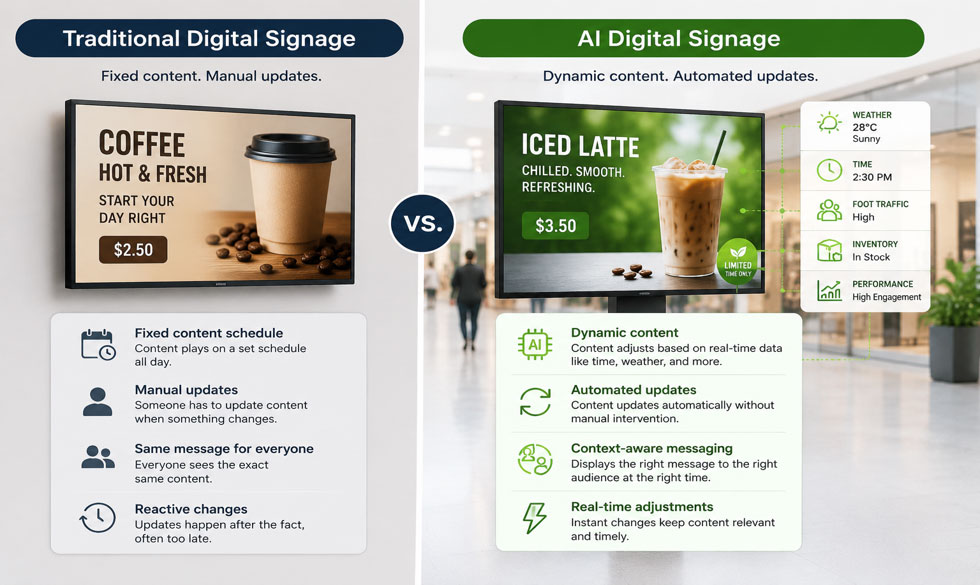
Traditional digital displays follow a set schedule. Someone creates the content, assigns it to a playlist, and decides when it appears on screen. If something changes, a product sells out, the weather shifts, or a promotion ends, someone has to update it manually.

AI adds a layer of intelligence to that process.

Instead of sticking to a fixed schedule, AI-powered digital displays can use data like weather conditions, foot traffic, inventory levels, or time of day to adjust content automatically. The goal isn’t to replace human decision-making. It’s to reduce repetitive tasks and make sure the right message appears at the right time.

AI-Digital-Signage

AI Digital Signage Trends to Watch in 2026

The technology is evolving quickly, but a few trends are standing out from the rest. Here’s what’s shaping the next generation of digital signage.

1. Content That Updates Itself

Nobody wants to manually update dozens of screens throughout the day.

That’s why more businesses are using real-time content automation to keep displays current. Promotions, menus, pricing, announcements, and inventory-based messages can all update automatically as conditions change.

For businesses managing large display networks, it’s a huge time-saver.

2. More Personalized Messaging

Digital displays are becoming better at understanding context.

Instead of showing the same message to everyone, businesses can tailor content based on factors like location, time of day, audience traffic, or local conditions. The goal isn’t one-to-one personalization—it’s making content feel more relevant to the people seeing it.

3. AI-Generated Content

Creating fresh content is often one of the biggest challenges in digital signage.

Generative AI is making it easier to produce ad copy, promotional messages, translations, and design variations, helping teams create more content without adding more work.

4. Smarter Analytics

It’s no longer enough to know what was displayed.

Businesses want to know what actually worked.

Modern intelligent signage systems can help identify which campaigns get the most engagement, which messages perform best, and when audiences are most responsive.

5. Interactive Experiences

Digital displays are becoming more than just screens.

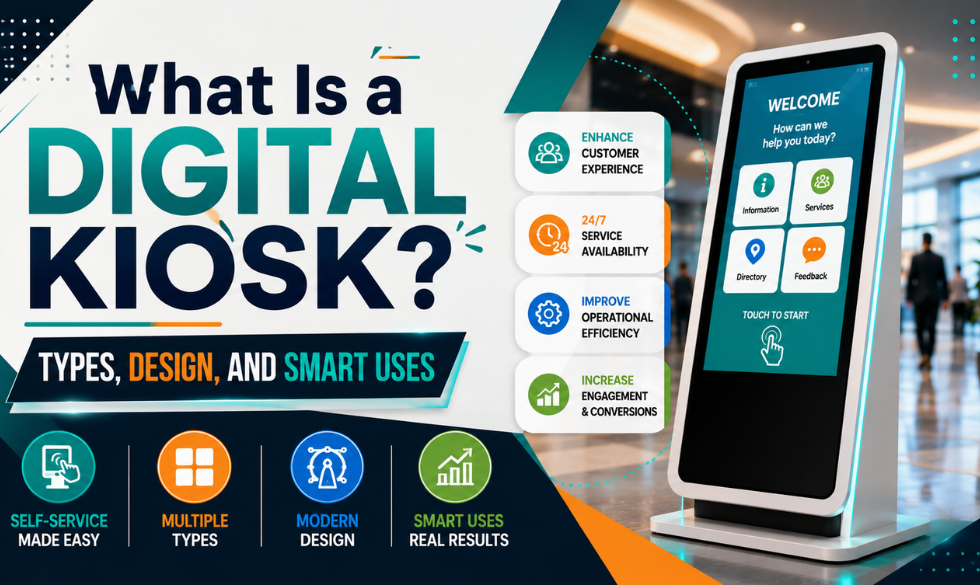
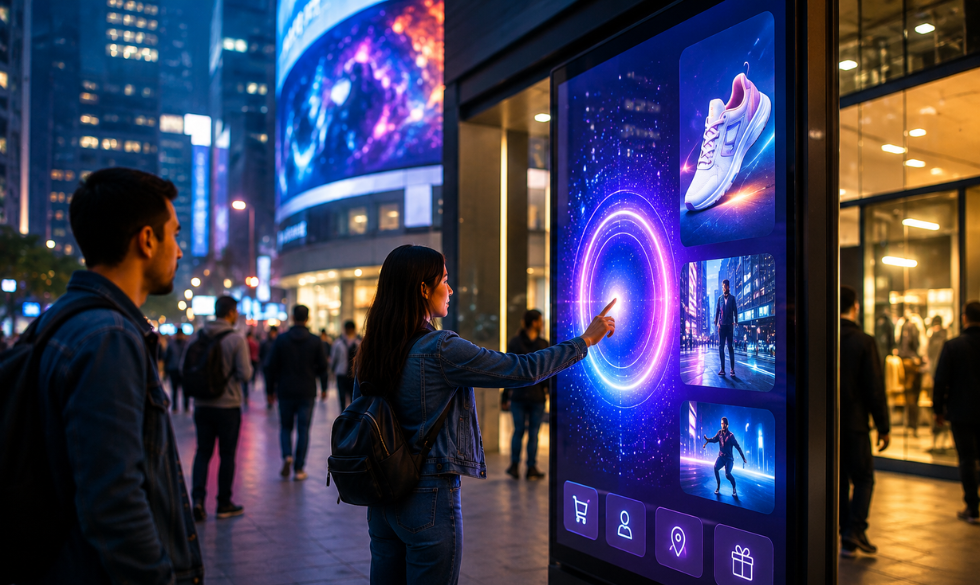
From touch-enabled kiosks to voice-assisted interfaces, businesses are exploring new ways to turn passive displays into interactive customer experiences.
Benefits AI Digital Signage

What AI Digital Signage Looks Like in the Real World

It’s easy to talk about AI in theory. Here’s what it actually looks like on a normal day.

8:00 AM: A coffee shop promotes hot lattes and breakfast combos to commuters rushing to work.

🥗 1:00 PM: The menu board switches to lunch specials automatically.

🌧️ 4:00 PM: Rain starts pouring outside. The display near the entrance begins promoting umbrellas and rain jackets.

🛒 6:00 PM: A product starts selling faster than expected. The store’s digital displays move it to a featured position.

✈️ 8:00 PM: An airport gate changes. Passenger information screens update instantly.

None of these changes require someone running around updating screens manually. The display adapts as situations change.

Is AI Digital Signage Worth It?

For most businesses, the question is whether the improvements justify the investment.

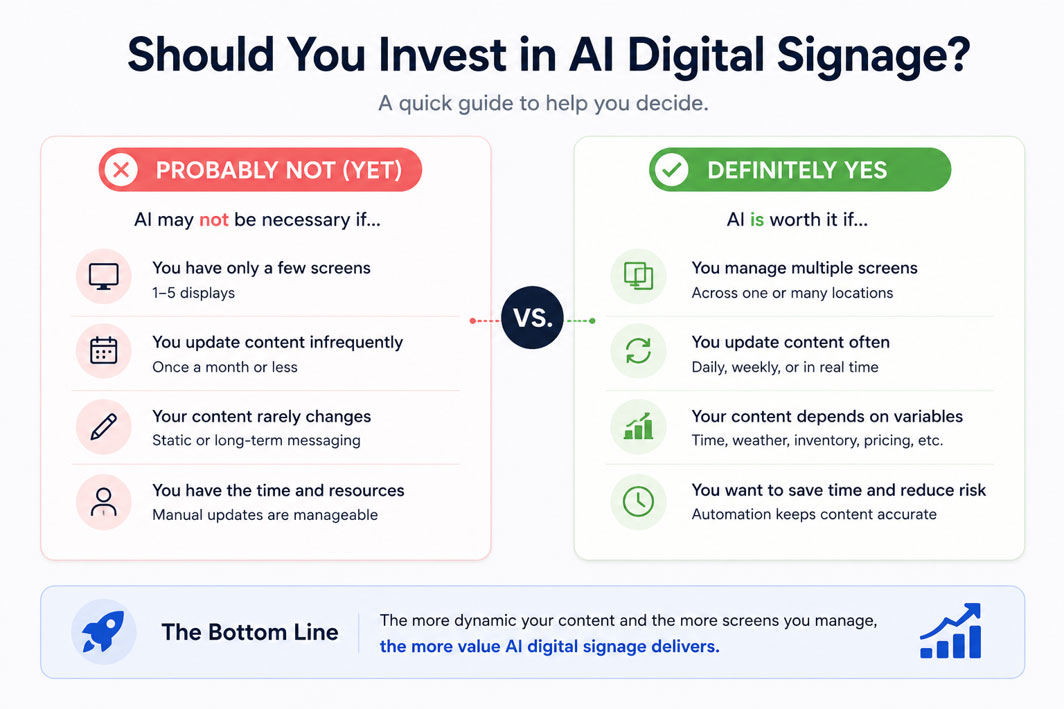
The answer depends on how many screens you’re managing and how often your content changes. If you’re updating a handful of displays once a month, AI may not make a dramatic difference.

But if you’re constantly changing menus, promotions, pricing, inventory information, or customer communications, automation can save a significant amount of time and reduce the risk of outdated content appearing on screen.

In a nutshell, the more content there is to manage, the more valuable automation becomes.

invest in ai digital signage

Final Thoughts

Let’s be honest, nobody got into business because they enjoy updating screens all day.

Whether it’s changing menu boards, swapping out promotions, or making sure the right content shows up at the right time, managing digital signage can quickly turn into a tedious task.

That’s exactly why AI digital signage is gaining traction. It takes care of the repetitive stuff, keeps content fresh, and helps your screens stay relevant without constant babysitting.

The technology is getting smarter, but the real win is simple: less time spent managing displays and more time spent focusing on your business.

Still updating screens the hard way?

Book a trial with Intelisa and see how much easier digital signage can be when your displays do more of the work for you.

FAQs

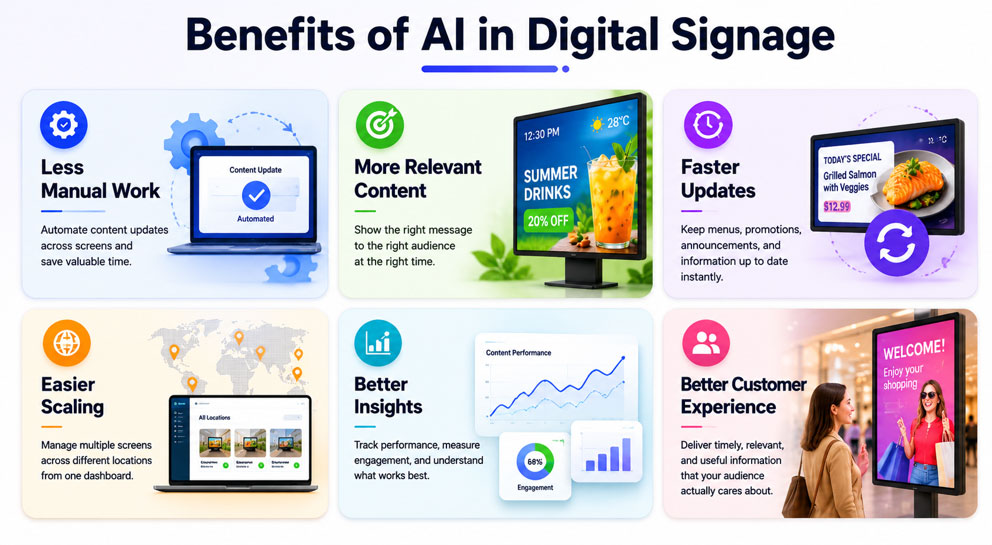
AI is making digital signage more dynamic and easier to manage. Businesses can automate content updates, personalize messaging, analyze performance, and display more relevant content without constantly updating screens manually.

Some of the biggest benefits include:

  • Less manual work
  • Real-time content updates
  • More relevant messaging
  • Better content performance insights
  • Easier management across multiple locations

Improved customer experiences

Yes. AI-powered digital displays can adjust content based on factors like location, time of day, audience traffic, and environmental conditions. This helps businesses show more relevant messages to the people viewing the screen.

AI digital signage is commonly used in retail stores, restaurants, shopping malls, healthcare facilities, airports, corporate offices, hotels, educational institutions, and smart city projects.

The cost depends on the size of your display network and the features you need. Many modern digital signage platforms offer scalable solutions that make AI-powered features accessible to both small businesses and large enterprises.

Start by identifying where manual content management is slowing your team down. From there, choose a digital signage platform that supports automation, centralized content management, and AI-powered features that match your business needs.