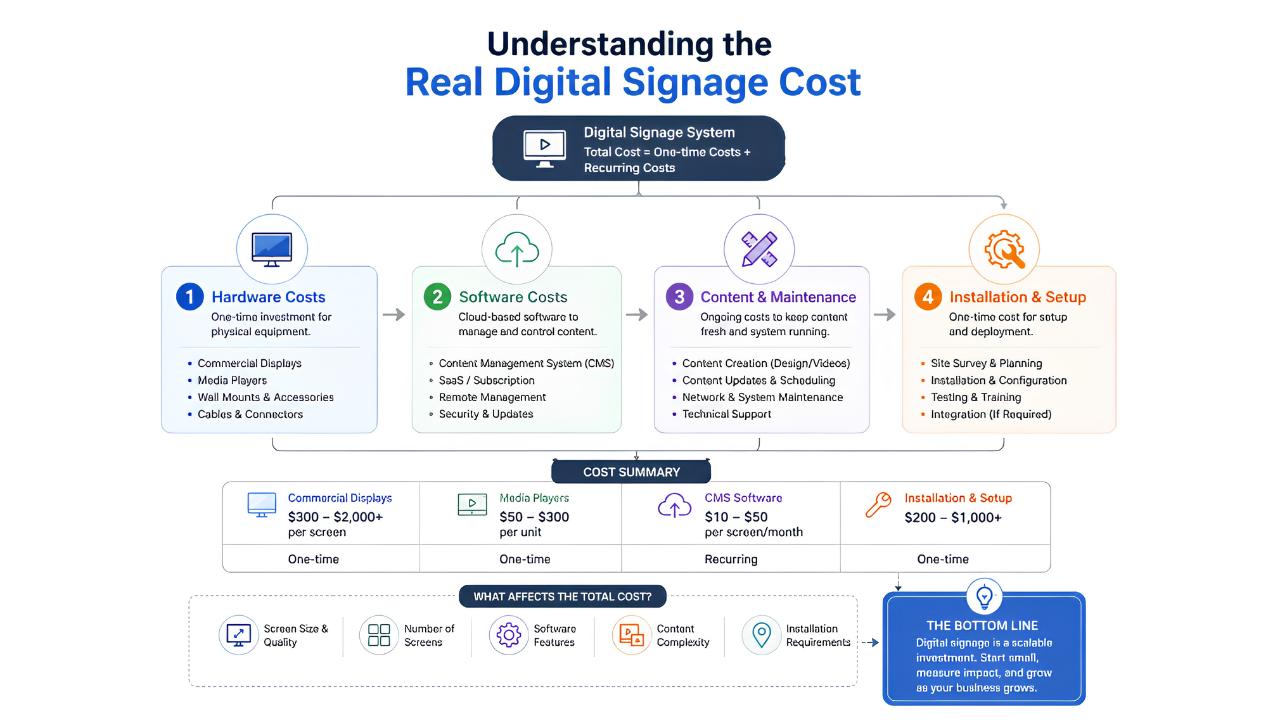
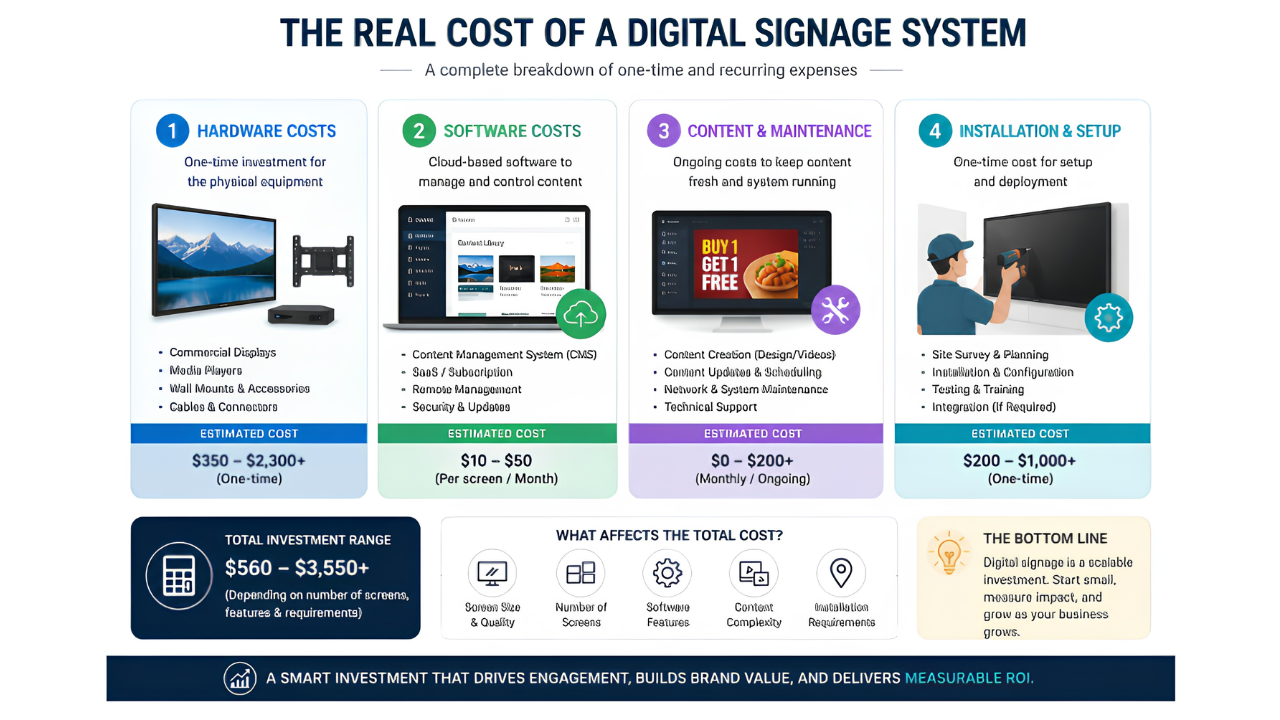
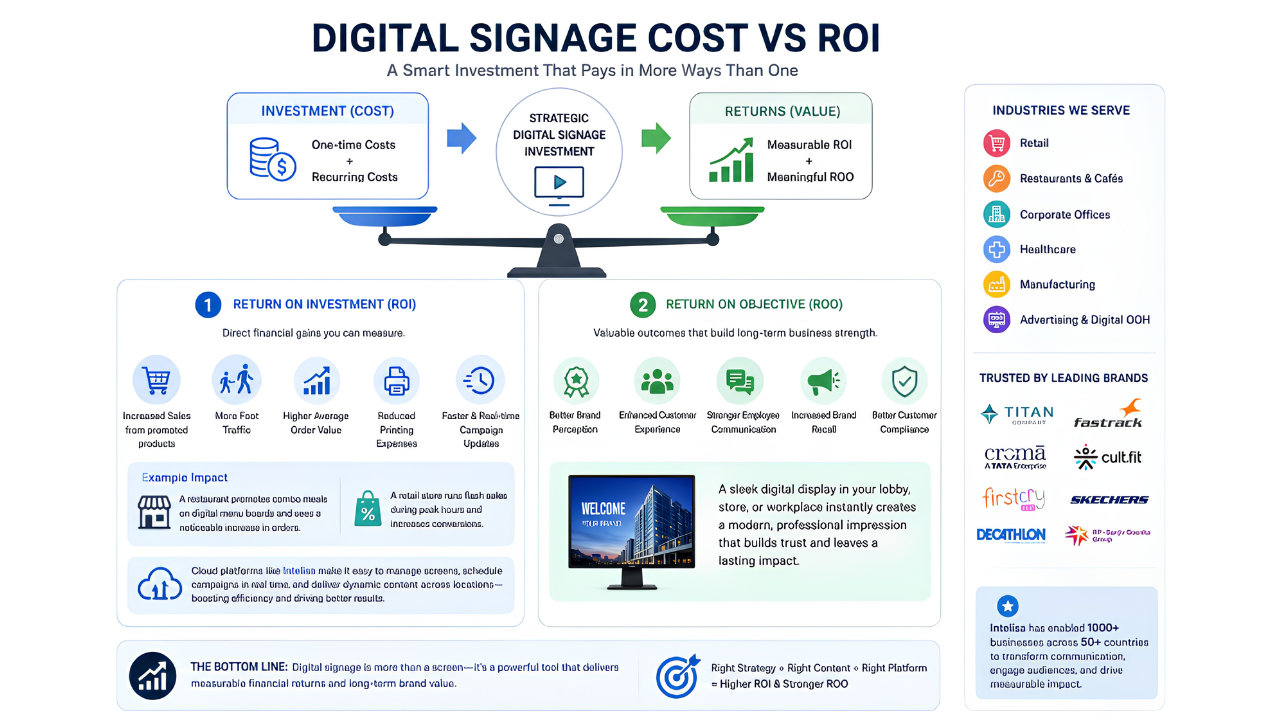
When businesses first look into digital signage, they often focus only on the screen price. But the cost of a digital signage system includes several moving parts.
The good news? You can scale it based on your budget.
1. Hardware costs
The biggest upfront expense is usually the display itself.
Most businesses use commercial-grade digital displays because they’re designed to run for long hours without overheating or losing brightness. Consumer TVs may seem cheaper initially, but they often don’t hold up well in business environments.
A basic setup may include:
- Commercial displays
- Media players
- Wall mounts
- Cabling and installation accessories
Why commercial displays matter
Commercial screens are built for:
- 16/7 or 24/7 operation
- Better brightness
- Longer lifespan
- Remote management compatibility
That’s why they’re often recommended for professional digital signage setups.
2. Software costs
The next part of digital signage pricing is the software.
Most businesses use a Content Management System (CMS) to:
- Schedule content
- Update screens remotely
- Manage multiple locations
- Run promotions in real time
Some CMS platforms charge monthly SaaS fees, while others offer one-time licenses.
Cloud-based systems are usually preferred because they’re easier to manage and scale.
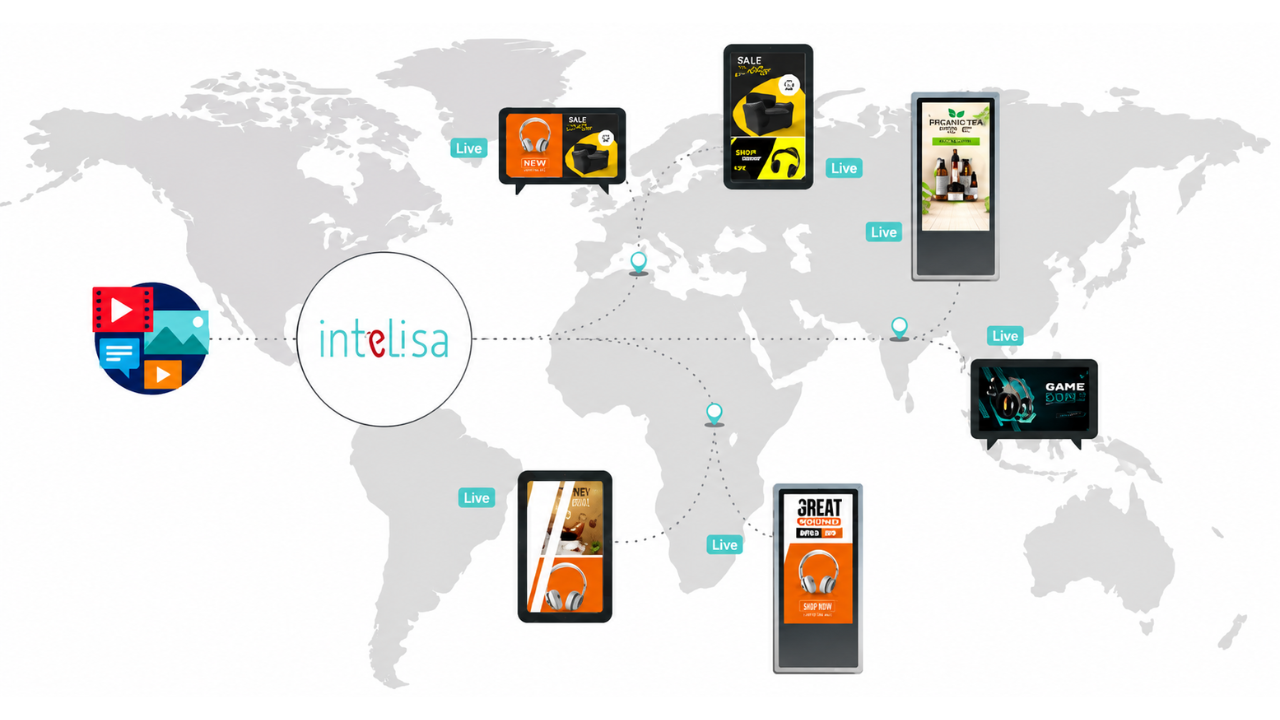
This is why many businesses now prefer integrated digital signage solutions instead of sourcing hardware, software, and content tools separately.
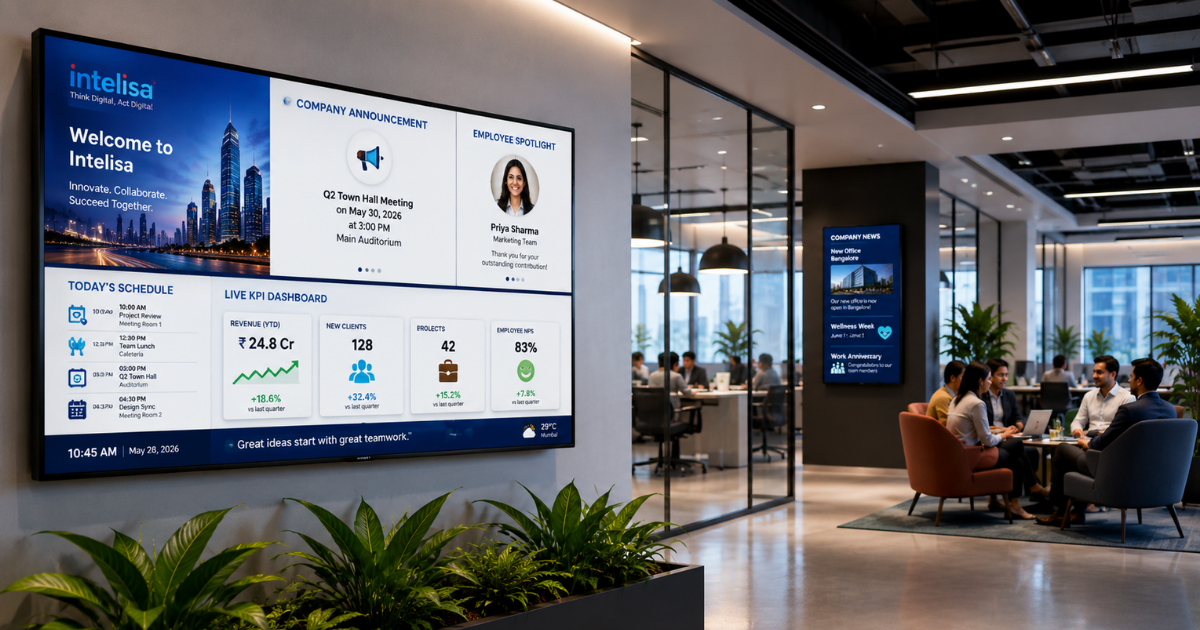
| 💡Platforms like Intelisa combine cloud-based content management, remote scheduling, and plug-and-play deployment into a single system, making it easier for businesses to manage screens without needing a large technical team. |
3. Content creation & maintenance costs
This is the part businesses sometimes overlook.
A screen is only as effective as the content displayed on it.
You may need:
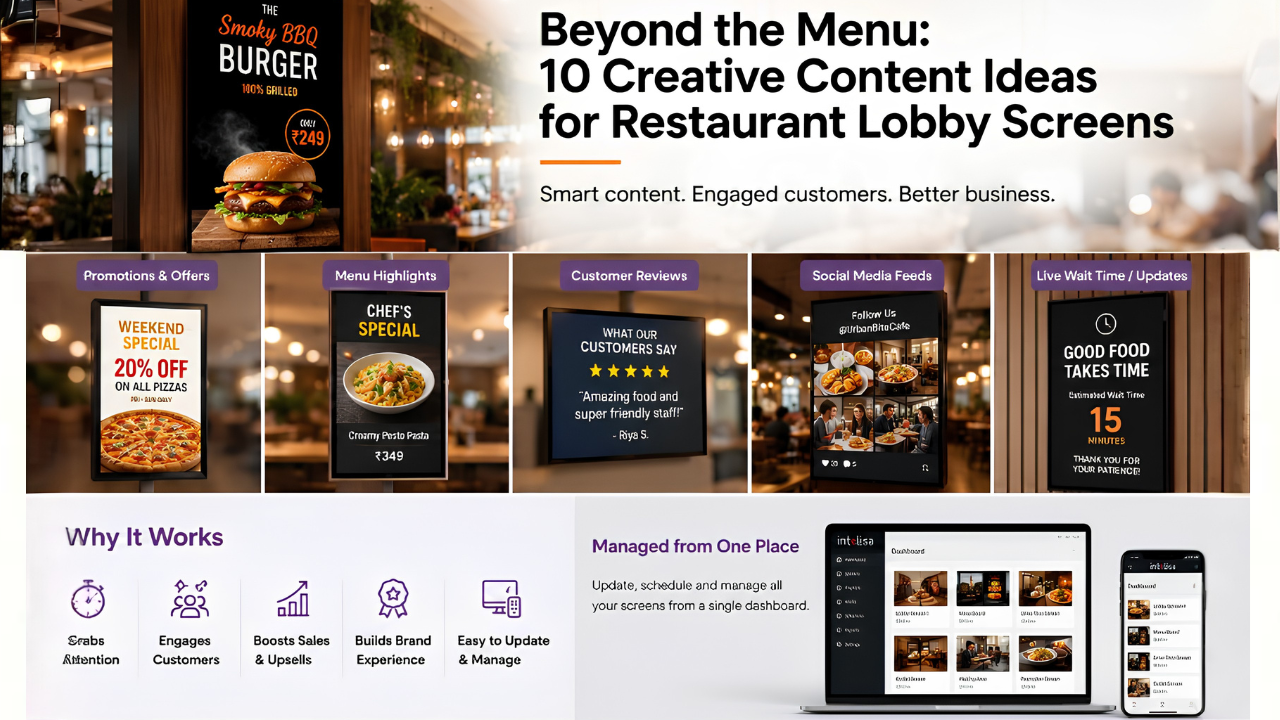
- Promotional graphics
- Videos
- Menus
- Internal announcements
- Motion design
You’ll also need occasional maintenance for:
- Internet connectivity
- Software updates
- Hardware servicing
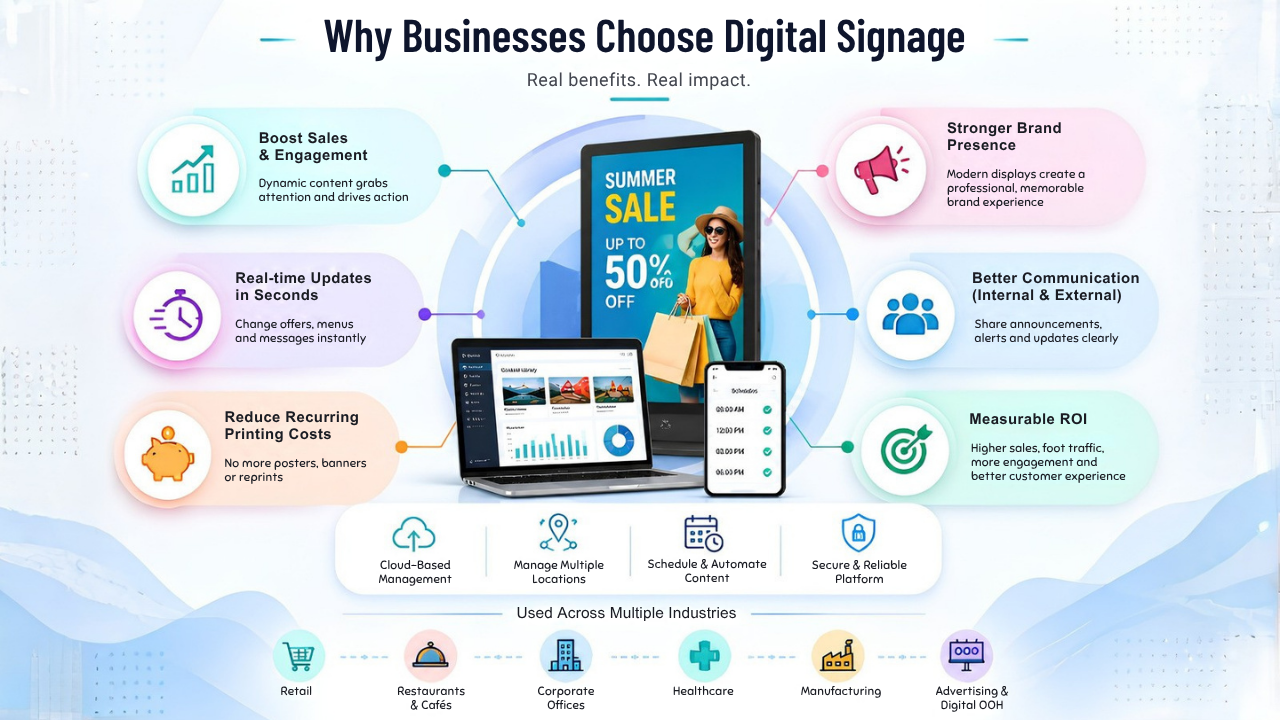
The upside? Once your system is live, updating content becomes far cheaper than constantly printing posters or banners.