February 25, 2026
Billboard

The era of “post and pray” is officially over.

If you walk through the bustling streets of New York, Dubai, or Singapore today, you’ll notice a subtle yet profound shift. The screens surrounding us haven’t just become brighter—they’ve become sentient. Artificial Intelligence isn’t just a buzzword; it is the central nervous system of public advertising.

Digital Out-of-Home (DOOH) has evolved from simple electronic posters into intelligent ecosystems that sense, adapt, and optimize in real-time. Here is how AI is transforming the landscape and how platforms like Intelisa are leading the charge.
The End of Static Ad Loops

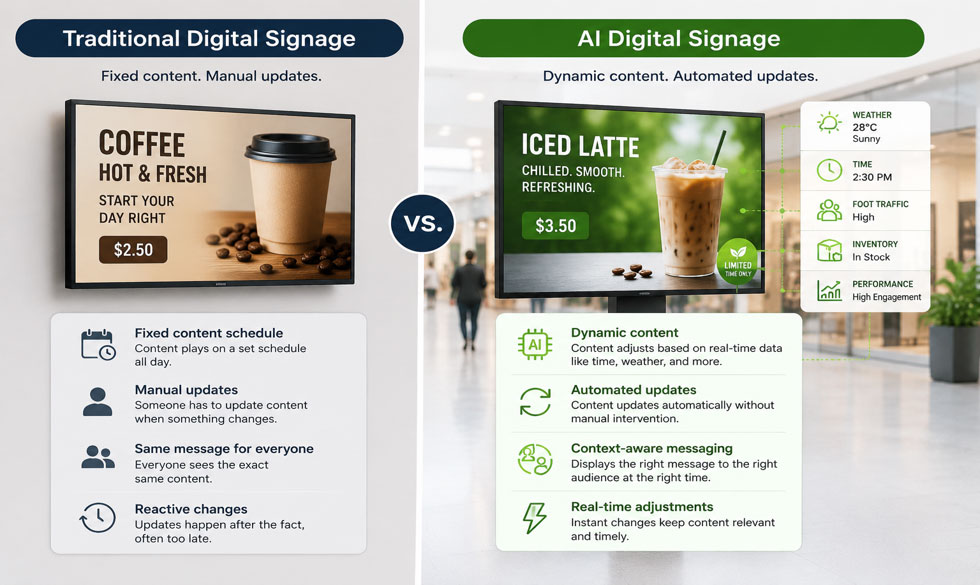
For decades, DOOH relied on the “fixed loop”—a 30-second ad playing on repeat regardless of who was watching. AI and edge computing have effectively dismantled this “set-it-and-forget-it” model.

Today’s screens utilize dynamic decision-making to react to real-world triggers:

  • Weather-Responsive: A sudden downpour instantly switches a screen from sunscreen ads to ride-hailing services or hot coffee promotions.
  • Demographic Sensing: As a group of Gen-Z shoppers approaches, the creative shifts to trending streetwear or the latest sneaker drop.
  • Contextual Assembly: Instead of one static video, AI assembles multiple creative elements (headlines, visuals, and offers) on the fly to match the moment.

💡 Pro Tip: Stop designing “an ad.” Build a kit of creative parts. Let the AI determine which combination of visual and headline will convert best in the current environment.

Precision Targeting: Measuring Attention, Not Just Traffic

In a high-velocity urban world, footfall is a vanity metric. What matters is attention. AI-powered sensors now allow brands to move beyond “how many people passed by” to “how many people actually looked.”

Modern systems now measure:

  • Gaze Duration: How long eyes stayed on the screen.
  • Dwell Time: How long a person remained in the vicinity.
  • Engagement Signals: Whether the viewer interacted via mobile or gesture.

This data allows for a Temporal Content Strategy: morning commuters get punchy, direct messaging, while evening crowds with higher dwell times are served immersive storytelling.

Making Smart DOOH Accessible With Intelisa

AI-powered DOOH is no longer limited to large global brands.

Platforms like Intelisa are making cloud-based digital signage solutions accessible to businesses of all sizes.

Instead of manual updates, businesses can now run proactive campaigns that adjust automatically.

Key Capabilities

  • Inventory sync that removes unavailable products automatically
  • Real-time campaign updates across locations
  • QR-based engagement for seamless customer journeys
  • Centralized dashboard to manage multiple screens

This turns DOOH into a smart and responsive system.

💡 Intelisa Pro Tip: Use QR codes to connect outdoor ads with online conversions.

Programmatic DOOH: The Digital Precision of Outdoor

The way we buy ad space has changed. Programmatic DOOH (pDOOH) allows brands to bid on “moments” rather than locations.

  • Hyper-Local Targeting: Only show ads on screens within 500 meters of your retail store.
  • High-Intent Moments: A movie studio can bid for higher frequency specifically near cinemas on Friday nights.
  • Budget Agility: Shift your spend instantly based on which locations are performing best.

💡 Pro Tip: Focus on high-intent moments instead of continuous exposure.

Moving Toward Performance-Driven Metrics

Outdoor advertising used to be a “brand awareness” play. By integrating AI with mobile location data and QR interactions, brands can now track:

  1. Screen Exposure vs. Store Visits.
  2. App Downloads triggered by specific displays.
  3. Direct Purchases via scan-to-buy features.

💡 Pro Tip:  Always include a clear call to action to improve tracking.

Why AI-Driven DOOH Is Growing Globally

The growth of AI in DOOH is driven by several global trends.

Urban Expansion

Cities are becoming more crowded, increasing the need for smarter communication.

Smart Infrastructure

Digital screens are now part of transport systems, malls, and public spaces.

Cost Efficiency

Technology has become more affordable for businesses.

Changing Consumer Expectations

People expect personalized and relevant messaging everywhere.

These factors are driving rapid adoption worldwide.

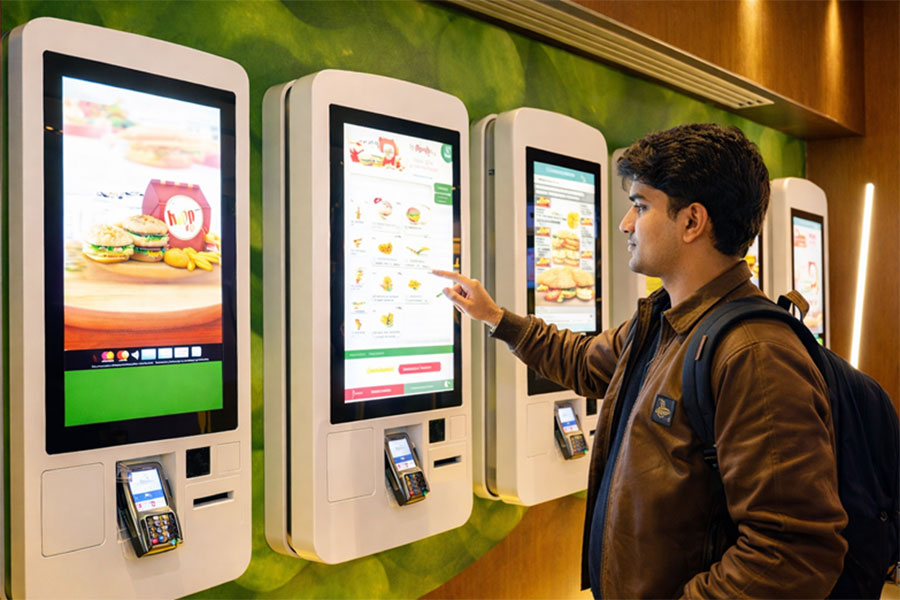
Interactive Screens and Smart Kiosks

DOOH is no longer passive.

Interactive kiosks are becoming common in malls, airports, and retail spaces.

Common Use Cases

  • Mall navigation
  • Airport check-in
  • Product discovery
  • Ticket booking
  • Customer feedback

With AI, these systems can:

  • Recommend products
  • Change language automatically
  • Offer location-based deals
  • Trigger real-time promotions.

Pro Tip: Interactive screens increase engagement time significantly.

The Future: What’s Next for Smart Screens?

We are already seeing the next wave of innovation:

  • Generative Creatives: AI that designs its own layouts based on what is trending on social media that hour.
  • Voice & Gesture: Interactive kiosks that allow users to ask for directions or browse products hands-free.
  • IoT Integration: Screens that dim or brighten based on city power grids or change content based on traffic congestion levels.

The Bottom Line

Your billboard is no longer a static piece of vinyl—it is a connected, data-driven team member. Success in this new era doesn’t go to the brand with the most screens; it goes to the brand that uses them most intelligently. With Intelisa, you aren’t just buying visibility; you’re buying relevance.

Pro Tip: Use 3D visuals and immersive formats to capture attention and increase recall.

Frequently Asked Questions

AI-powered DOOH uses artificial intelligence to optimize ad content, timing, and placement based on real-time data.

Yes, modern systems follow a privacy-first design and do not store personal identity.

Yes, programmatic DOOH allows businesses of all sizes to run targeted campaigns.

ROI can be measured using QR codes, location tracking, and conversion analysis.

Retail, restaurants, real estate, entertainment, and healthcare all benefit from DOOH advertising.

Intelisa provides a cloud-based digital signage solution with real-time updates, centralized control, and AI-driven optimization.

The Final Word: From Static to Smart

Digital out-of-home advertising is no longer just about visibility. It’s become a smart, data-driven channel where every screen can deliver the right message at the right time.

Artificial intelligence is transforming DOOH into a responsive and measurable medium. Instead of static ads, brands can now run dynamic campaigns that adapt to time, location, and audience behavior.

For businesses of all sizes, this change opens up new opportunities. With Intelisa, managing and optimizing digital signage has become easier, faster, and more effective.

In the coming years, the brands that will win won’t be the ones with the most screens, but the ones that use them most wisely.

Because today, it’s not about being everywhere.

It’s about being relevant when it matters most.