May 23, 2026

Most restaurants use their screens the same way. A menu goes up, maybe a combo offer, or a festive graphic that stays there for three months.

However, restaurant digital signage can do so much more than display food prices. Your lobby screen is one of the first things people notice when they walk in.

It’s there while they wait for a table, stand in line, scroll through delivery orders, or decide what to eat. So why waste that attention?

The smartest restaurants today are using screens to entertain customers, build cravings, increase upsells, create ambience, and make the whole dining experience feel more memorable.

And the best part? You don’t need massive budgets or complicated tech to make it work.

In this guide, we’ll look at creative restaurant screen content ideas you can start using right away, whether you run a café, QSR, cloud kitchen, fine-dining restaurant, or franchise.
What to show on restaurant digital signages

This is where many restaurants get stuck. Once the menu is live, people often run out of ideas. But your screen content should evolve constantly. The goal isn’t just to fill empty screen space. 

It’s to create moments that make someone suddenly crave dessert, pull out their phone to post a story, or feel like the wait wasn’t actually that long.

Here are some restaurant lobby screen ideas that actually work.

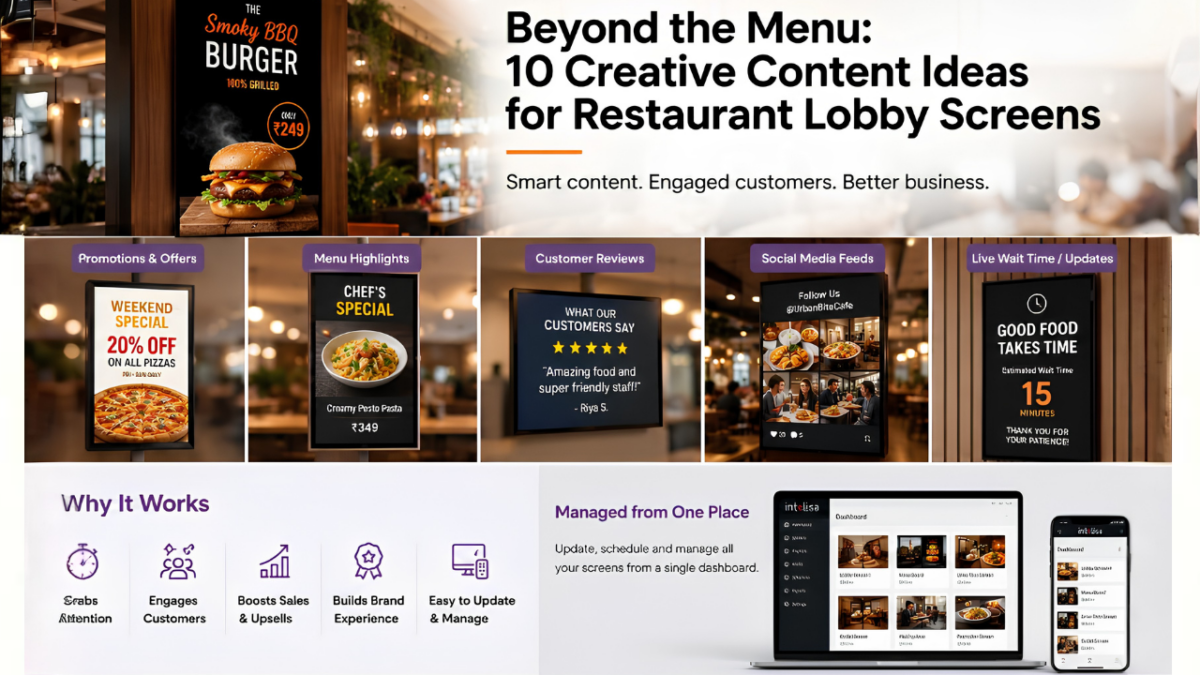
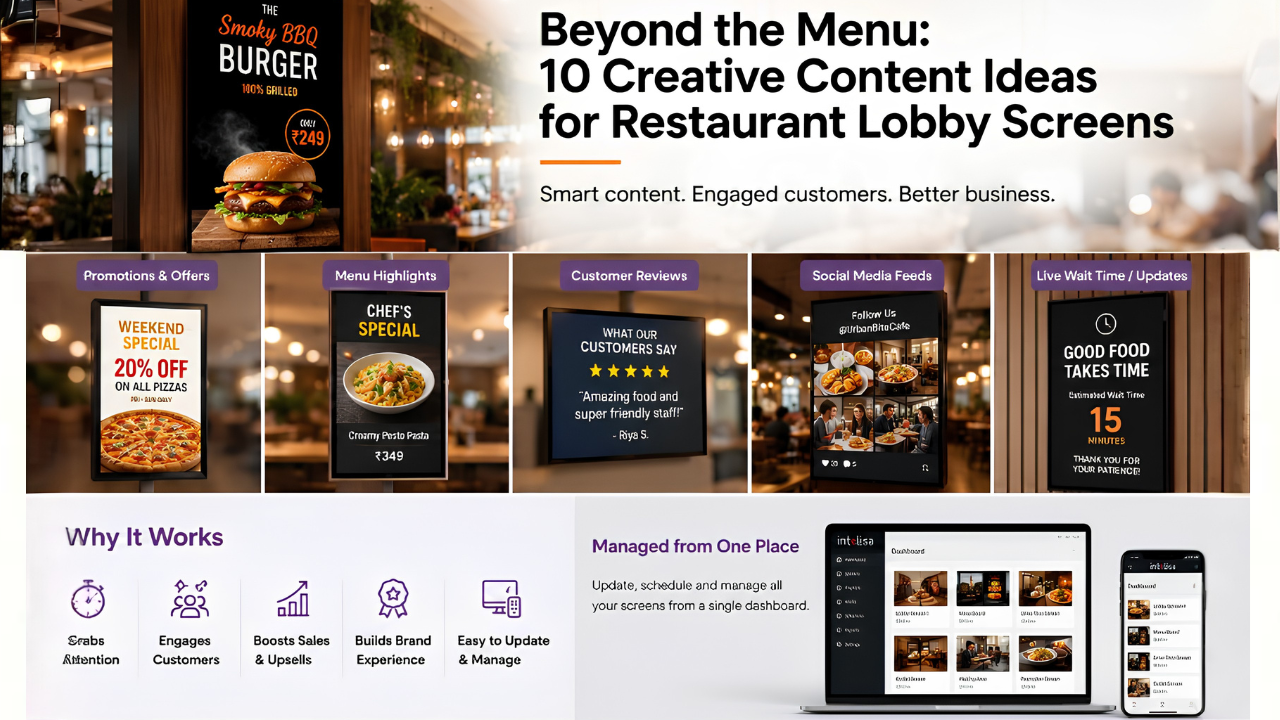
Beyond the Menu 10 Creative Content Ideas for Restaurant Lobby Screens

1. Make Your Food Look Impossible to Ignore

This one sounds obvious, but most restaurants still don’t do it particularly well.

Instead of relying on static food photos, use motion wherever possible. Show cheese pulls, coffee pours, burgers sizzling on the grill, chocolate dripping over desserts, or steam rising from fresh dishes.

Food visuals work because people eat with their eyes first. One of the best digital menu board ideas is turning your signature dishes into mini cinematic moments that instantly trigger cravings.

Even subtle movement can dramatically increase attention. And instead of simply showing the dish, add small emotional cues like: “Our most ordered pasta.”

Or: “Freshly baked every morning”.

That extra layer of storytelling makes the food feel far more memorable and desirable.

Make Waiting Feel Less Annoying

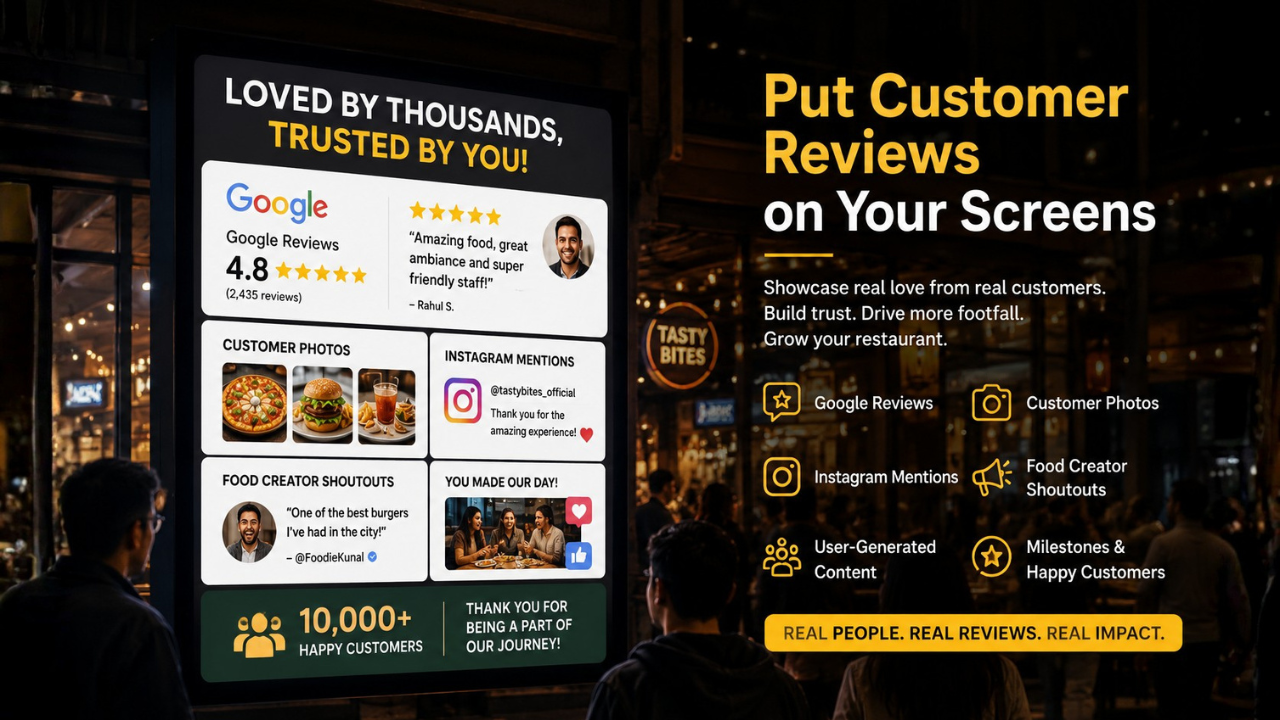
2. Put Customer Reviews on Your Screens

People trust people. A glowing review on a screen feels far more authentic than traditional advertising.

So instead of only talking about yourself, let customers do it for you.

You can showcase:

  • Google reviews
  • Customer photos
  • Instagram mentions
  • Food creator shoutouts
  • User-generated content
  • Milestones like “10,000 happy customers”

This works especially well in crowded food markets where customers are choosing between multiple restaurants nearby.

Social proof gives people reassurance.

It quietly says: “Others loved this place too.”

And that matters more than most restaurant owners realize.

Put Customer Reviews on Your Screens

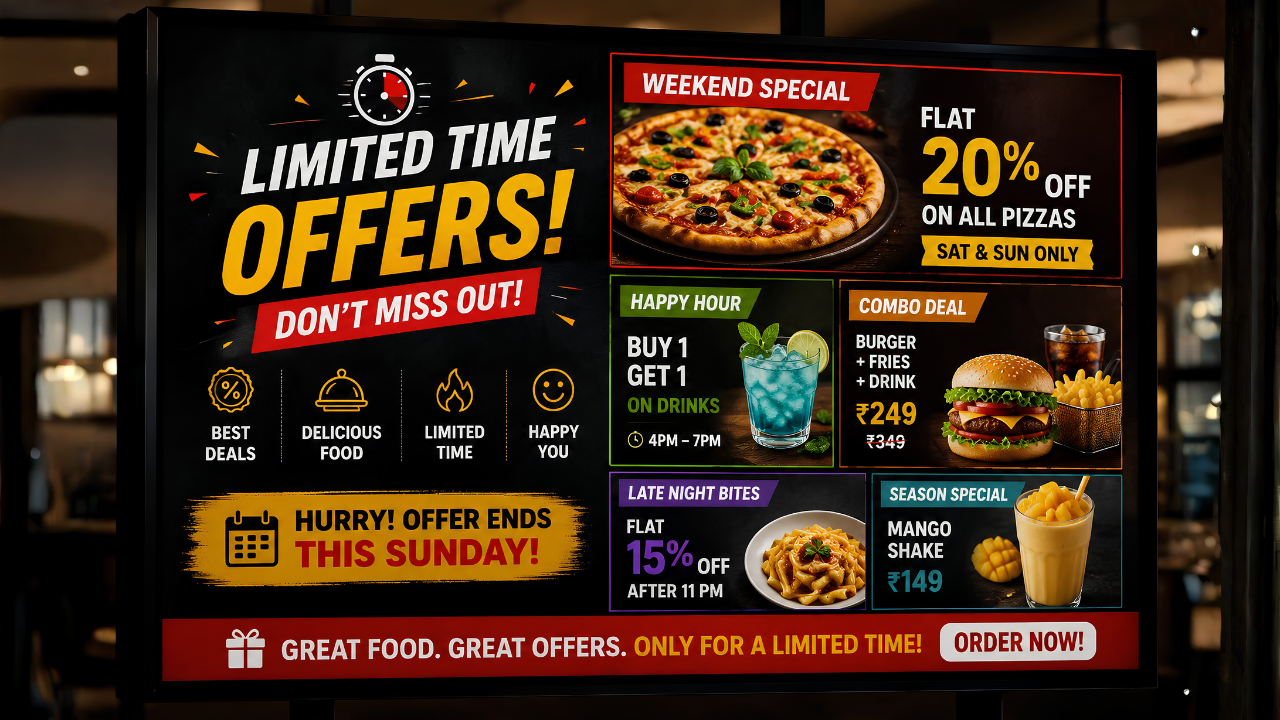
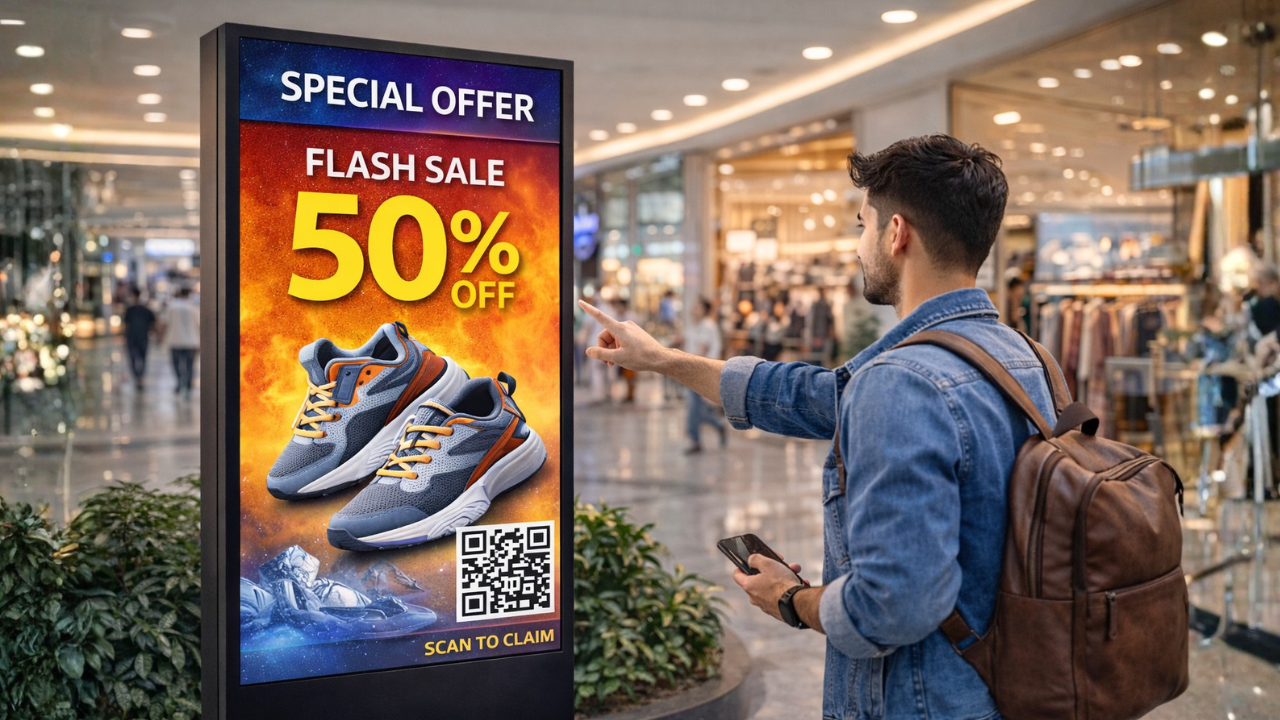
3. Use Screens to Push Limited-Time Offers

A printed poster doesn’t create urgency, but a moving screen does.

That’s the magic of restaurant digital signage.

You can instantly highlight:

  • Weekend specials
  • Happy hours
  • Seasonal drinks
  • Combo offers
  • Flash discounts
  • Festive menus
  • Late-night deals

The key here is timing.

Instead of saying: “Try our summer drinks.”

Say: “Only available this weekend”

That small change makes people act faster.

FOMO works, especially with food.

Use Screens to Push Limited-Time Offers

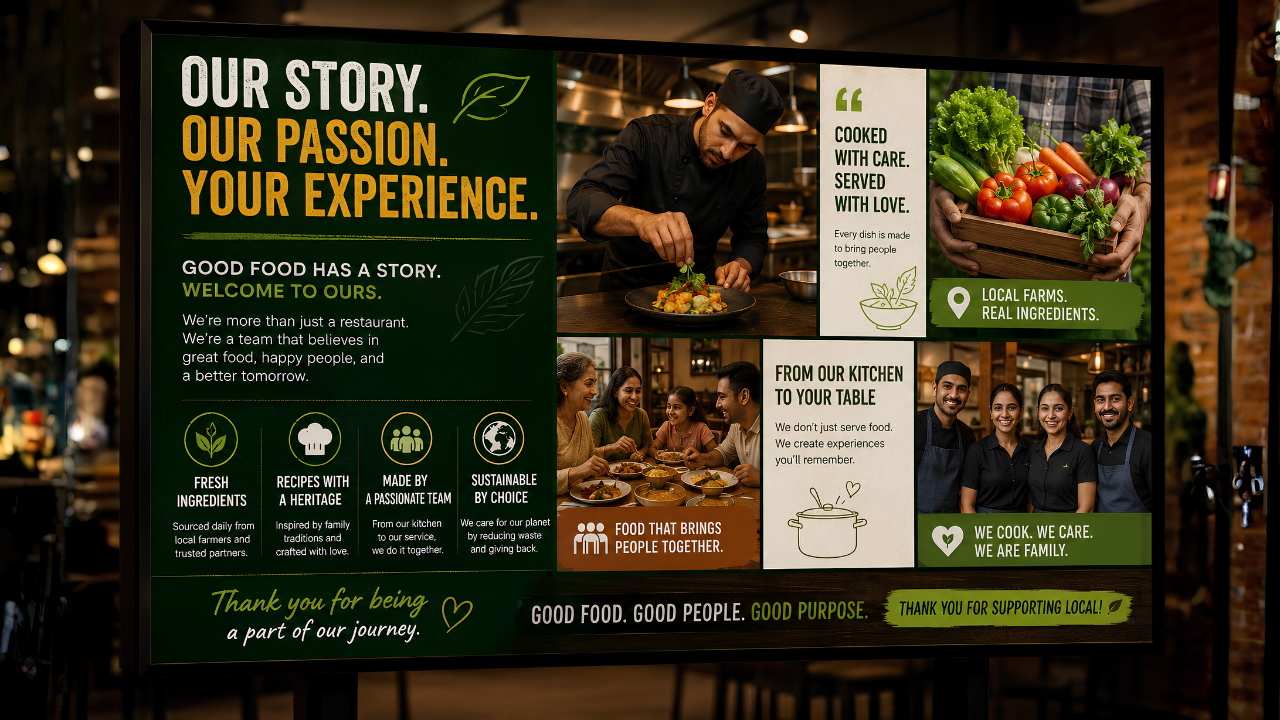
4. Tell People About Your Restaurant

Not just your menu, but your story. Customers love knowing what makes a restaurant different.

  • Maybe your ingredients come from local farms.
  • Maybe your recipes are family traditions.
  • Maybe your chef trained somewhere interesting.
  • Maybe your cafĂ© rescues surplus food.

These stories matter.

And lobby screens are a great place to tell them.

You can show:

  • Behind-the-scenes kitchen footage
  • Chef interviews
  • Team stories
  • Sustainability efforts
  • Ingredient sourcing
  • Restaurant history

Storytelling gives your brand personality, and personality is what people remember.

Tell People About Your Restaurant

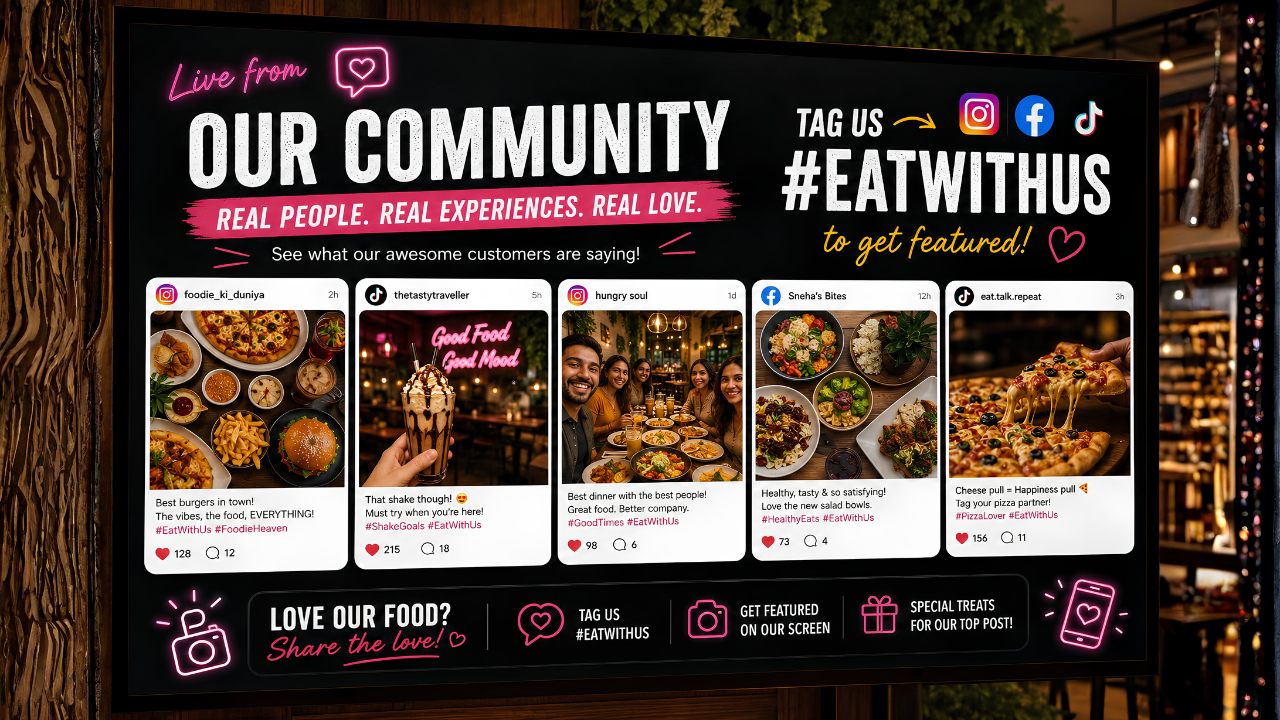
5. Display Live Social Media Feeds

This is one of the easiest ways to make the restaurant lobby display content feel fresh all the time.

Instead of static graphics, pull in live social content.

  • Customer posts
  • Tagged photos
  • Instagram reels
  • TikToks

This does two things:

First, it makes your space feel active and popular.

Second, it encourages more customers to post about you.

You can even add: “Tag us to get featured.”

That simple line can increase user-generated content dramatically.

Especially for cafés and visually driven restaurants.

Display Live Social Media Feeds

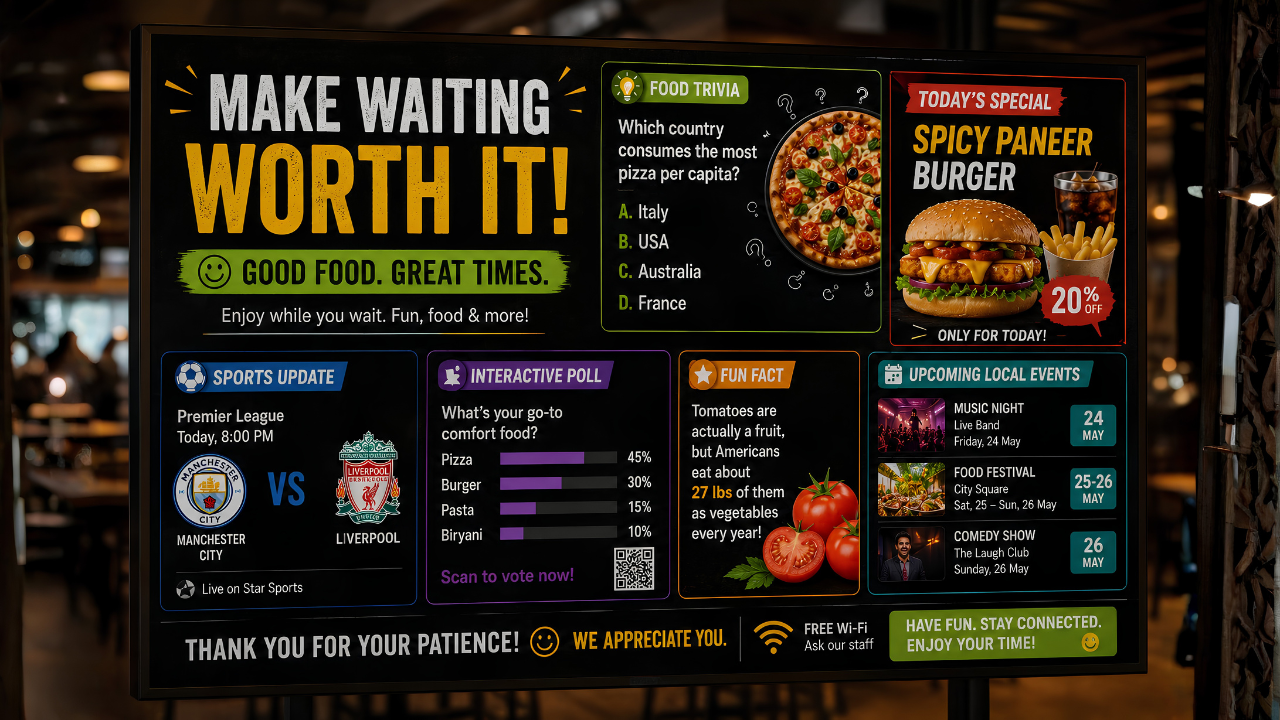
6. Make Waiting Feel Less Annoying

Nobody likes waiting. But interesting screens can make waits feel shorter.

That’s why entertainment-based content works so well.

You can show:

  • Food trivia
  • Fun facts
  • Sports updates
  • Interactive polls
  • Mini quizzes
  • Entertaining short videos
  • Local event updates

This strategy works particularly well for QSRs and busy restaurants with long queues.

Because distracted customers are usually more patient customers.

And a better waiting experience often leads to a better overall brand experience.

Make Waiting Feel Less Annoying

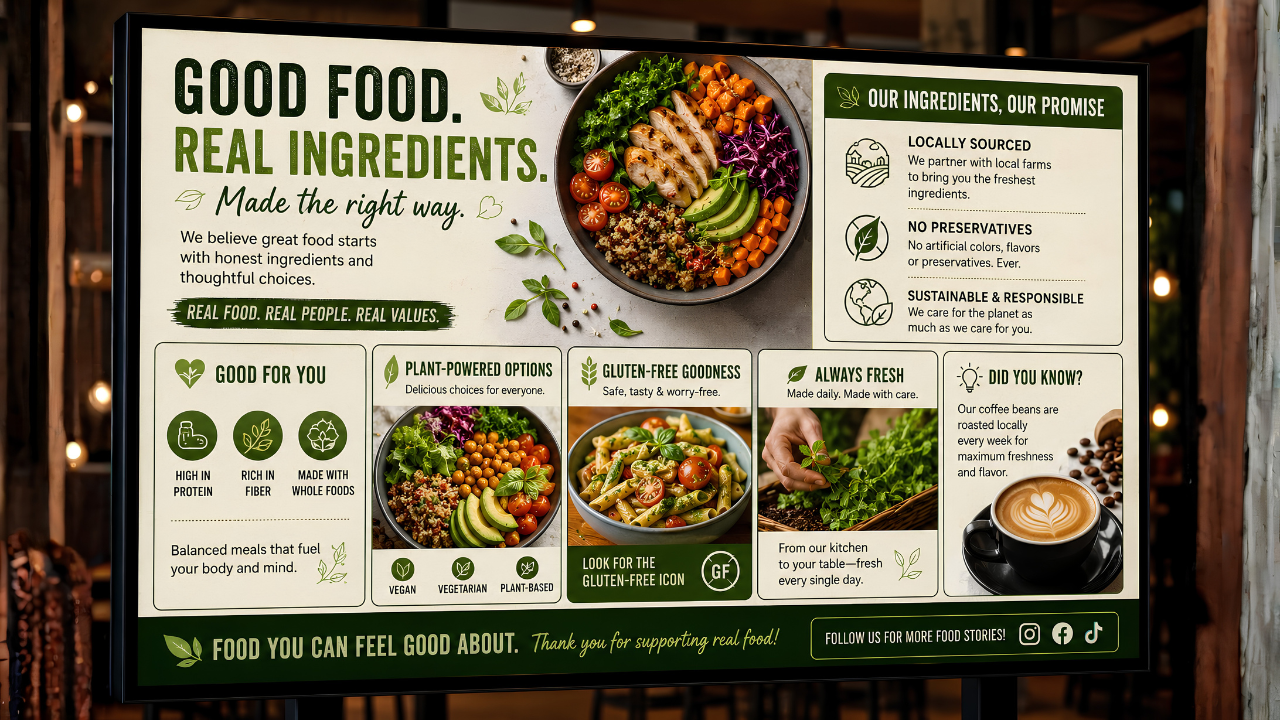
7. Educate Customers Without Sounding Boring

Modern customers care more about ingredients than ever before, especially younger audiences. 

People want transparency. They want to know:

  • Where ingredients come from
  • Whether dishes are healthy
  • Which options are vegan or gluten-free
  • How fresh the food is
  • What makes your food different

Restaurant digital signage is perfect for this.

And no, educational content doesn’t have to feel corporate.

You can keep it visual, quick, and conversational.

Something like: “Our coffee beans are roasted locally every week.”

Simple, useful, and memorable.

Educate Customers Without Sounding Boring

8. Upsell Without Feeling Pushy

Nobody enjoys aggressive selling. But smart upselling? That works.

Digital screens are amazing for subtle recommendations.

For example:

  • Showing desserts right after meal visuals
  • Pairing drinks with burgers or pizzas
  • Highlighting combo upgrades visually
  • Suggesting sides during peak ordering hours

The trick is making it feel natural.

Not forced.

The best digital menu boards guide customer decisions visually instead of aggressively shouting offers.

And over time, even small upsells can significantly increase revenue.

Upsell Without Feeling Pushy

9. Promote Events and Community Nights

If your restaurant hosts events, your lobby screen should absolutely talk about them.

Things like:

  • Live music nights
  • Open mics
  • Sports screenings
  • Karaoke nights
  • Festive specials
  • Brunch events
  • Chef tastings
  • Community collaborations

This gives customers a reason to come back.

And honestly? It makes your restaurant feel alive.

Especially for cafés and lifestyle-driven spaces, events help build a loyal community around the brand.

10. Use Screens to Create Ambience

Not every piece of content needs to sell something.

Sometimes the goal is simply to make the space feel better.

This is where ambient visuals become incredibly powerful.

Think:

  • Rain visuals
  • Coffee brewing loops
  • Fireplace animations
  • Cinematic city shots
  • Nature footage
  • Abstract motion graphics
  • Slow cafĂ©-style visuals

These little details change how a restaurant feels.

And perception matters.

A restaurant that feels premium often gets treated like a premium restaurant.

This is where large-format displays and video walls can completely transform interiors.

A Few Quick Tips Before You Start

Before you start adding random content to your screens, here are a few things worth keeping in mind.

Keep Text Minimal

People glance at screens quickly. If they have to read giant paragraphs, they’ll ignore them.

Short messaging works best.

Motion Works Better Than Static

Even subtle animation attracts attention. You don’t need flashy visuals everywhere.

Just enough movement to guide the eye.

Refresh Content Regularly

If the same graphic stays up for six months, people stop noticing it.

Rotate content often.

Especially:

  • Promotions
  • Seasonal items
  • Events
  • Social posts
  • Featured dishes

Freshness keeps screens effective.

Match Content to Customer Behavior

Different screens should do different things.

For example:

Customer Situation Best Content
Waiting in line Promotions and upsells
Waiting for food Entertainment content
Entering restaurant Branding and ambience
Dining area Lifestyle visuals and events

This makes your digital signage strategy feel intentional instead of random.

How Restaurants Are Using Digital Signage Today

Different restaurants use screens differently.

  • Quick-service restaurants focus heavily on speed and promotions.
  • Fine-dining spaces use screens more subtly for ambience and storytelling.
  • CafĂ©s use them for community-building and social engagement.
  • Cloud kitchens use them for pickup communication.

But the bigger shift happening right now is this:

Restaurant screens are no longer just informational, they’re experiential.

And customers increasingly expect that.

Bringing these ideas to life with Intelisa

If all of this sounds exciting yet slightly overwhelming, that’s exactly where Intelisa comes in. At Intelisa, we’ve seen restaurants use digital signage for far more than just displaying menus.

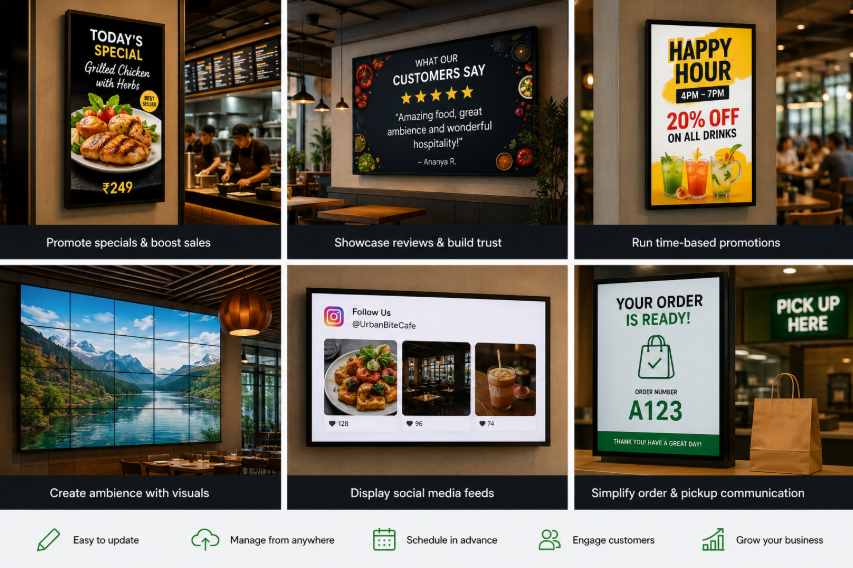
Some use it to highlight bestsellers and promotions, while others use it to create ambience, showcase customer reviews, run social media feeds, or simply make waiting feel less boring.

The biggest advantage of restaurant digital signage is flexibility. You can update content instantly, manage multiple screens from one place, schedule promotions in advance, and keep your displays fresh without constantly redesigning or reprinting materials.

Whether you run a cafĂ©, QSR, cloud kitchen, or fine-dining restaurant, Intelisa’s cloud-based digital signage platform helps you create screen experiences that feel engaging rather than repetitive. And because everything is managed centrally, it’s much easier to keep content consistent across locations while still updating in real time.

If you want to see how it works, start your free trial today!

Frequently Asked Questions

Restaurant digital signage refers to digital displays used inside restaurants to show menus, promotions, branding content, entertainment, or customer communication.

Restaurants can show promotions, food visuals, customer reviews, social media feeds, events, ambience visuals, educational content, and upsell recommendations.

Digital signage helps restaurants improve customer engagement, increase upsells, reduce perceived wait times, and create a more modern dining experience.

Some of the best digital menu board ideas include motion food visuals, combo offers, limited-time deals, add-on recommendations, and seasonal promotions.

Restaurants should ideally update promotions weekly and rotate visuals regularly to keep content fresh and engaging.